
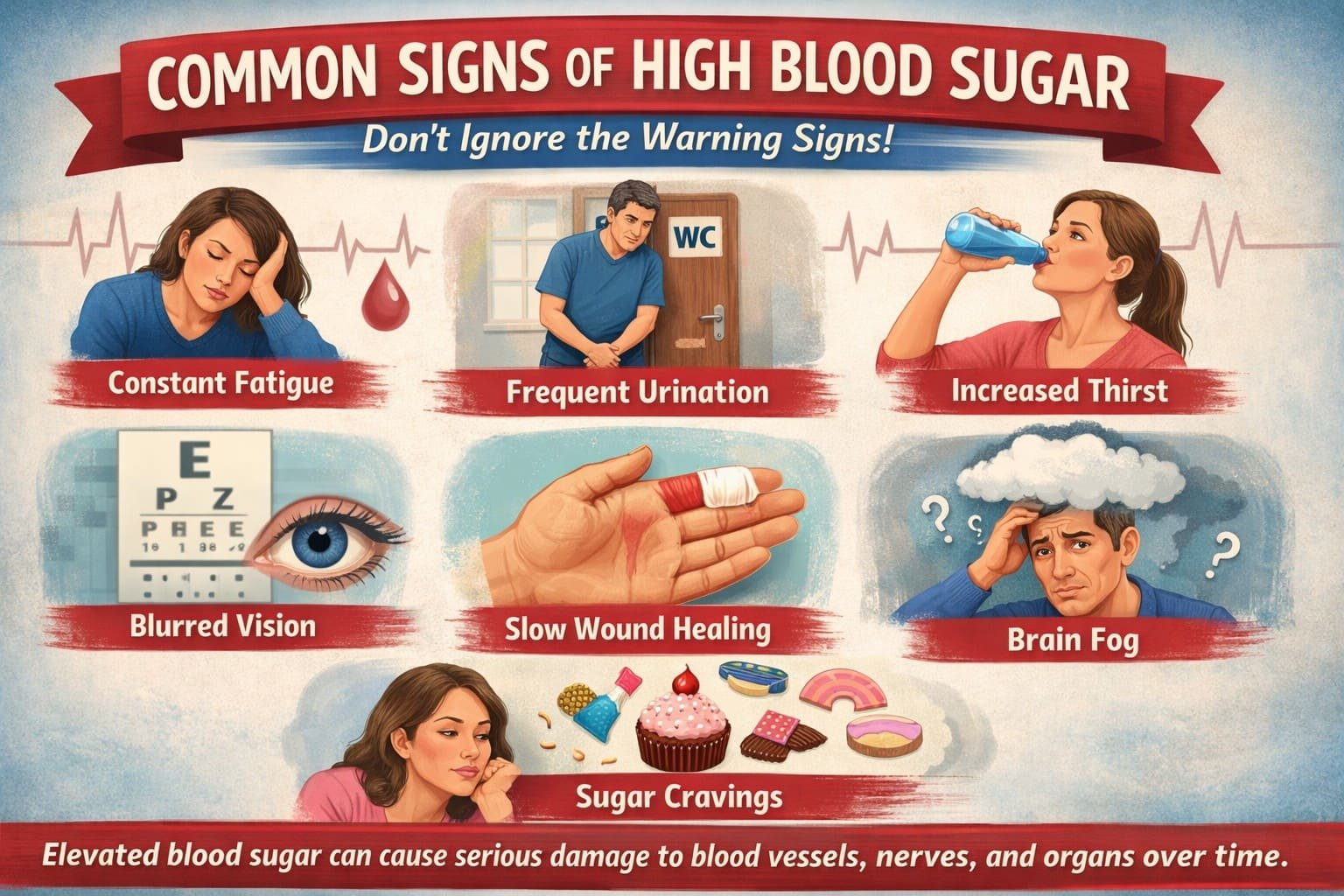
Persistent fatigue, frequent urination, brain fog, and sugar cravings are among the most commonly missed warning signs that blood sugar is running too high.
Blood sugar dysregulation is one of the most widespread and most underdiagnosed metabolic conditions in the United States. An estimated 96 million American adults — more than one in three — have prediabetes, and the majority don't know it. Millions more experience chronic blood sugar fluctuations that, while not yet meeting clinical diagnostic thresholds, are causing real and measurable harm to their health every day.
The challenge is that high blood sugar rarely announces itself dramatically. Its symptoms are non-specific, easily attributed to other causes, and develop so gradually that many people adapt to feeling suboptimal without recognizing it as a blood sugar problem. By the time blood sugar levels are elevated enough to cause obvious symptoms, metabolic damage has typically been accumulating for years.
Understanding the early warning signs — and recognizing when a pattern of seemingly unrelated symptoms might point to a blood sugar issue — is one of the most valuable things you can do for your long-term health. This article covers the ten most common signs of high blood sugar, explains the biology behind each one, and outlines what steps to take if you recognize yourself in this list.
How Blood Sugar Works — and What Goes Wrong
Every time you eat carbohydrates, your digestive system breaks them down into glucose, which enters the bloodstream. In response, the pancreas releases insulin — a hormone that acts as a key, unlocking cells throughout the body to allow glucose to enter and be used for energy. This process normally keeps blood glucose within a narrow, well-regulated range.
Problems arise when this system becomes dysregulated in one of two ways. In insulin resistance — the most common form — cells stop responding efficiently to insulin's signal. The pancreas compensates by producing more insulin, but eventually can't keep up, and blood glucose rises persistently. This is the mechanism behind prediabetes and type 2 diabetes. In type 1 diabetes, the pancreas produces little or no insulin at all due to autoimmune destruction of the insulin-producing beta cells.
Chronically elevated blood glucose damages blood vessels, impairs nerve function, promotes systemic inflammation, and disrupts virtually every organ system in the body. The longer blood sugar runs elevated — even modestly — the greater the cumulative damage. This is why early recognition matters enormously.
10 Common Signs of High Blood Sugar
1. Fatigue — Especially After Meals
One of the most reliable and most overlooked signs of blood sugar dysregulation is energy crashes after eating — particularly after carbohydrate-heavy meals. When insulin resistance is present, cells can't efficiently absorb glucose from the bloodstream even when insulin is plentiful. The result: blood sugar spikes after eating, followed by a compensatory insulin surge that drives blood glucose down rapidly, leaving you tired, foggy, and reaching for more food within an hour or two of eating. This post-meal energy crash is often dismissed as normal — but consistent energy crashes after eating are a meaningful metabolic signal.
2. Frequent Urination
The kidneys filter blood continuously and normally reabsorb glucose back into circulation. When blood glucose rises above a threshold (approximately 180 mg/dL), the kidneys can no longer reabsorb all of it — glucose spills into the urine, pulling water with it through osmosis. The result is increased urine volume and urinary frequency. If you find yourself urinating significantly more often than usual — particularly at night — elevated blood glucose is a condition worth ruling out, especially in combination with other symptoms on this list.
3. Increased Thirst
Directly linked to frequent urination: as the body loses more water through increased urine output, it triggers the thirst mechanism to compensate. This creates a cycle — excessive thirst leads to more fluid intake, which contributes to more urination. Persistent, unusual thirst that isn't explained by heat, exercise, or low fluid intake is a classic hyperglycemia symptom and was historically one of the defining signs used to identify diabetes before modern blood testing existed.
4. Blurred Vision
High blood glucose causes the lens of the eye to absorb fluid and swell, temporarily changing its shape and altering how light is focused on the retina. This produces blurred or fluctuating vision that may change throughout the day as blood sugar levels rise and fall. This is distinct from the long-term retinal damage (diabetic retinopathy) that develops from chronically elevated blood sugar — the blurring described here is a shorter-term functional change. If vision blurriness fluctuates with meals or time of day, blood sugar is worth investigating.
5. Slow Wound Healing
High blood sugar impairs wound healing through multiple mechanisms: it reduces blood flow to peripheral tissues (impairing the delivery of oxygen, nutrients, and immune cells), suppresses white blood cell function (reducing the immune response to infection), and promotes bacterial growth (bacteria thrive on glucose). Cuts, scrapes, and bruises that take noticeably longer than expected to heal — or small wounds that become infected more easily than they should — can be an indirect indicator of chronically elevated blood glucose.
6. Brain Fog and Poor Concentration
The brain is the most glucose-dependent organ in the body, consuming approximately 20% of the body's total glucose despite comprising only 2% of its weight. Paradoxically, both very high and very low blood sugar impair cognitive function. When blood sugar is chronically elevated, the resulting insulin resistance affects the brain's ability to use glucose efficiently — contributing to mental sluggishness, poor concentration, and difficulty with word recall. The post-meal brain fog many people experience after high-carbohydrate meals is a real neurological phenomenon driven by blood sugar fluctuations.
7. Frequent Infections
Elevated blood glucose creates an environment that suppresses immune function and promotes microbial growth simultaneously — a particularly problematic combination. Yeast infections (candidiasis) are especially associated with high blood sugar because Candida albicans thrives on glucose. Recurrent yeast infections, frequent urinary tract infections, or skin infections that occur more often or heal more slowly than expected are worth discussing with a doctor, as they can signal underlying metabolic dysregulation.
8. Tingling or Numbness in Hands and Feet
Peripheral neuropathy — nerve damage in the extremities — develops when chronically elevated blood sugar damages the small blood vessels that supply nerves in the hands and feet. The earliest manifestation is typically tingling, numbness, or a "pins and needles" sensation, particularly in the feet. This symptom is more associated with prolonged hyperglycemia than with acute blood sugar spikes — its presence suggests blood sugar has been elevated for some time and warrants prompt medical evaluation.
9. Intense Sugar and Carbohydrate Cravings
When cells are insulin-resistant and can't efficiently absorb glucose, the brain doesn't receive adequate energy signals even when blood sugar is elevated. The result is persistent hunger and intense cravings for sugar and refined carbohydrates — the body is trying to solve an energy delivery problem by demanding more fuel, even though the problem is actually one of delivery (insulin resistance) rather than supply. This craving cycle — eat sugar, blood sugar spikes, insulin surges, crash, crave more sugar — is one of the most characteristic patterns of insulin resistance and is often mistaken for a simple lack of willpower.
10. Unexplained Weight Gain — Particularly Around the Abdomen
Chronically elevated insulin — the compensatory response to insulin resistance — is a powerful fat-storage signal. Insulin directs the body to store excess glucose as fat, particularly in visceral (abdominal) fat tissue. Abdominal weight gain that doesn't respond to dietary changes, combined with fatigue and sugar cravings, is a pattern highly consistent with insulin resistance. Visceral fat, in turn, worsens insulin resistance — creating a self-reinforcing metabolic cycle that becomes harder to break over time.
Why High Blood Sugar Is So Often Missed
Each symptom above can be explained individually by something else — stress, poor sleep, aging, dehydration. The pattern only becomes apparent when multiple symptoms occur together and persist over time. Additionally, standard medical screening often uses fasting glucose alone, which can appear normal in people with significant postprandial (after-meal) glucose spikes — the form of dysregulation most common in early prediabetes.
A more complete picture comes from HbA1c testing (which reflects average blood glucose over the prior 2–3 months), postprandial glucose testing (measured 1–2 hours after a meal), and fasting insulin levels (which can reveal insulin resistance even before glucose becomes chronically elevated). If you have several symptoms from the list above, discussing these tests with your doctor provides a much more informative metabolic snapshot than fasting glucose alone.
Natural Support for Healthy Blood Sugar Levels
For adults experiencing early blood sugar fluctuations or metabolic warning signs, several evidence-based strategies can meaningfully support glucose regulation:
- Reduce refined carbohydrates and added sugar — The most direct dietary intervention. Replacing refined carbohydrates with fiber-rich whole foods slows glucose absorption and reduces post-meal spikes.
- Increase dietary fiber — Soluble fiber (from oats, legumes, vegetables, and fruits) slows glucose absorption and improves insulin sensitivity over time.
- Regular physical activity — Exercise increases glucose uptake by muscle cells independently of insulin — one of the most powerful natural interventions for improving insulin sensitivity. Even 30 minutes of walking after meals significantly blunts post-meal glucose spikes.
- Prioritize sleep — A single night of poor sleep can reduce insulin sensitivity by 20–25%. Chronic sleep deprivation is one of the most underrecognized contributors to blood sugar dysregulation.
- Manage chronic stress — Cortisol directly raises blood glucose by stimulating glucose release from the liver. Chronic stress is a continuous driver of elevated blood sugar that dietary changes alone cannot fully offset.
- Key nutrients — Chromium, magnesium, cinnamon extract, and Gymnema Sylvestre all have documented mechanisms for supporting insulin sensitivity and glucose metabolism.
For adults looking for targeted nutritional support for blood sugar management, I've reviewed GlucoTonic in depth on this site. It combines Gymnema Sylvestre, Chromium Picolinate, Cinnamon Bark Extract, Bitter Melon, Banaba Leaf, and Zinc in a liquid drop formula designed to support multiple aspects of glucose metabolism simultaneously.
When to See a Doctor
If you recognize three or more symptoms from this article — particularly fatigue after meals, frequent urination, increased thirst, and brain fog occurring together — a conversation with your doctor about blood sugar testing is warranted. Ask specifically for:
- Fasting glucose — Standard screen; normal is below 100 mg/dL
- HbA1c — Reflects 2–3 month average; below 5.7% is normal, 5.7–6.4% indicates prediabetes
- Fasting insulin — Can reveal insulin resistance before glucose becomes abnormal
- 2-hour postprandial glucose — Measures blood sugar response after eating; below 140 mg/dL at 2 hours is normal
Early identification of prediabetes or insulin resistance opens the widest window for intervention — lifestyle changes at this stage are highly effective and can prevent progression to type 2 diabetes entirely.
The Bottom Line
High blood sugar is one of the most prevalent and most preventable metabolic conditions affecting Americans today — and one of the most commonly missed in its early stages. The symptoms described in this article are not isolated curiosities — they are your body's attempt to communicate that its glucose regulation system is under strain.
The good news is that early-stage blood sugar dysregulation responds remarkably well to intervention. Diet, exercise, sleep, stress management, and targeted nutritional support can together shift metabolic health in a positive direction before permanent damage accumulates. But that window is most effective when opened early. If this article has described your experience, the next step is a conversation with your doctor and a comprehensive metabolic panel.