An honest, research-based guide to which ingredients in joint pain creams actually have clinical evidence — and how to read a label to know what you're really buying.
The ingredient list on a joint pain cream can be genuinely overwhelming. Some products list three or four components. Others list twenty or more. Some use clinical-sounding names for simple counterirritants. Others include botanical extracts with real anti-inflammatory research behind them. Without a framework for evaluating what's in a formula and why it matters, most people end up choosing based on price, packaging, or brand recognition — none of which reliably correlate with effectiveness.
The reality is that joint pain cream ingredients fall into distinct functional categories — each addressing a different aspect of joint discomfort — and the best formulas include meaningful representatives from several of these categories simultaneously. A product that only provides menthol-based counterirritant relief is fundamentally different from one that also delivers anti-inflammatory compounds to the joint tissue and supports joint lubrication. Both may sit in the same pharmacy aisle at similar prices, but their mechanisms and outcomes are not comparable.
This article provides a research-based guide to the most clinically supported ingredients in joint pain creams — organized by mechanism, with honest assessments of the evidence and practical guidance on what to look for on a label. If you haven't already, my article on how topical joint pain relief works covers the underlying science of transdermal delivery that explains why ingredient selection matters so much.
The Five Mechanisms of Effective Joint Pain Cream
The most effective joint pain formulas address joint discomfort through multiple complementary mechanisms rather than a single pathway. Understanding these categories gives you a framework for evaluating any product:
- Immediate sensory relief — Fast-acting counterirritant compounds that provide rapid comfort through nerve receptor stimulation (menthol, camphor, capsaicin)
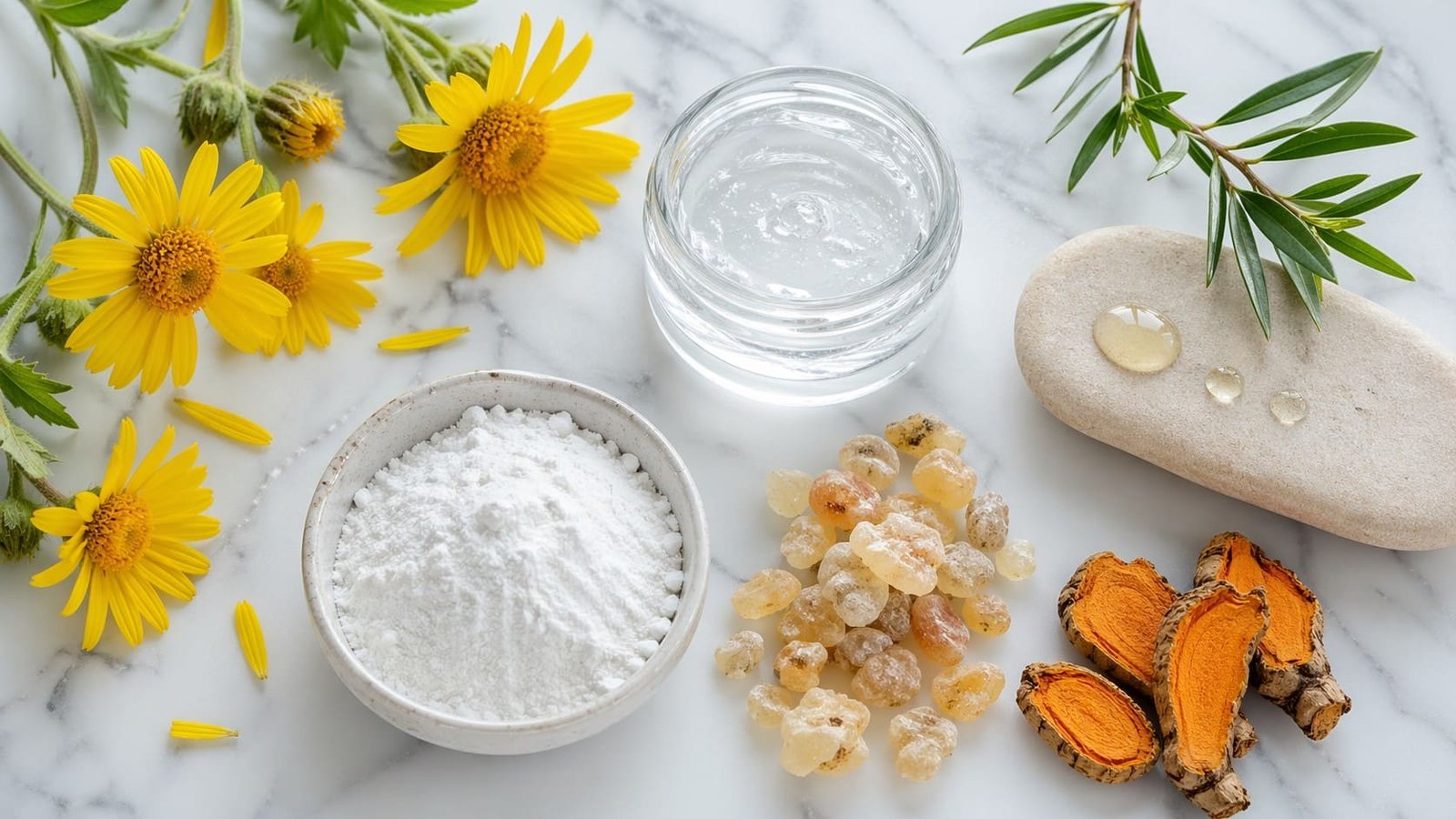
- Local anti-inflammatory action — Compounds that penetrate to joint tissue and reduce the inflammatory mediators driving pain (Arnica, Boswellia, diclofenac, curcumin)
- Joint lubrication support — Compounds that improve the mechanical environment within the joint by supporting synovial fluid function (Hyaluronic Acid)
- Penetration enhancement — Compounds that improve the transdermal delivery of other active ingredients (Tea Tree Oil, MSM, eucalyptus)
- Antioxidant tissue protection — Compounds that reduce oxidative damage to joint tissue (vitamin E, curcumin, Arnica flavonoids)
A formula containing ingredients from all five categories provides the most comprehensive joint pain support. A formula containing only category one (counterirritants) provides the least. Most products fall somewhere in between — and knowing where a product sits on this spectrum helps set realistic expectations.
Tier 1 — Anti-Inflammatory Ingredients With Strong Clinical Evidence
These are the compounds with the most meaningful published human clinical trial support for topical joint pain relief. Their presence in a formula in meaningful concentrations is the single most important indicator of a product's therapeutic potential.
Arnica Montana Oil or Extract
Mechanism: NF-κB inhibition, COX enzyme inhibition, antioxidant protection
Arnica is the best-evidenced botanical ingredient for topical joint and muscle pain, with a clinical evidence base that rivals pharmaceutical topical NSAIDs in some head-to-head comparisons. Its active sesquiterpene lactones — particularly helenalin and dihydrohelenalin — inhibit NF-κB, the master regulator of inflammatory gene expression in joint tissue, reducing production of the prostaglandins, cytokines, and inflammatory enzymes that drive both acute and chronic joint pain.
A systematic review in Medicines covering 13 randomized trials found significant and consistent pain reductions from topical Arnica across multiple joint and muscle conditions. A direct comparison trial published in the Journal of Pain Research found Arnica gel produced outcomes comparable to topical diclofenac for osteoarthritic hand pain — a meaningful finding given diclofenac's FDA-approved indication. Arnica also contains flavonoids (quercetin, luteolin) with documented antioxidant effects in joint tissue, providing an additional protective mechanism beyond acute pain relief.
What to look for on the label: "Arnica Montana flower extract," "Arnica Montana oil," or standardized Arnica extract. The position in the ingredient list (closer to the top indicates higher concentration) and whether the extract is standardized to helenalin content provides the best quality signal.
Boswellia Serrata Extract
Mechanism: 5-LOX inhibition, leukotriene reduction, cartilage-protective activity
Boswellia addresses the leukotriene inflammatory pathway — a dimension of joint inflammation that COX-inhibiting compounds like NSAIDs and Arnica don't fully cover. Leukotrienes are particularly active in the chronic inflammatory environment of osteoarthritic joints and contribute to cartilage degradation independently of prostaglandin pathways. By inhibiting 5-lipoxygenase (5-LOX), Boswellia's active boswellic acids reduce leukotriene production and have demonstrated direct cartilage-protective effects — making it one of the few topical joint ingredients with evidence for structural protection rather than symptom relief alone.
A systematic review published in Phytomedicine covering multiple randomized trials found consistent reductions in joint pain and improvements in physical function from Boswellia across oral and topical applications. Its lipid-soluble boswellic acids penetrate skin effectively in properly formulated vehicles, making it well-suited for transdermal delivery. Combined with Arnica (which covers the COX/prostaglandin pathway), Boswellia provides dual anti-inflammatory pathway coverage that is more comprehensive than either ingredient alone.
What to look for: "Boswellia Serrata extract," "AKBA" (acetyl-11-keto-β-boswellic acid — the most active boswellic acid), or "Boswellia Serrata resin extract."
Curcumin (Turmeric Extract)
Mechanism: NF-κB inhibition, COX-2 inhibition, antioxidant activity
Curcumin — the primary bioactive compound in turmeric — inhibits both NF-κB and COX-2 pathways, overlapping with Arnica's mechanisms while adding potent antioxidant activity that protects cartilage from oxidative damage. Curcumin's topical bioavailability is enhanced by essential oil vehicles that improve its penetration through the stratum corneum — making formulation quality particularly important for this ingredient. Research has documented curcumin's effectiveness for reducing arthritic joint inflammation in multiple human trials, and its antioxidant protection of cartilage collagen makes it one of the few ingredients relevant to both symptom management and long-term tissue protection.
What to look for: "Curcumin extract," "Curcuma longa root extract," or "turmeric extract standardized to curcuminoids." The percentage of curcuminoids specified indicates extract quality.
Tier 2 — Joint Lubrication and Structural Support
Hyaluronic Acid
Mechanism: Synovial fluid support, joint lubrication, anti-inflammatory via CD44 receptor
Hyaluronic Acid (HA) is the molecule that gives healthy synovial joint fluid its viscous, lubricating properties. In osteoarthritic joints, HA concentration and molecular weight in synovial fluid are reduced — contributing to increased friction, stiffness, and mechanical cartilage degradation. Intra-articular HA injections have strong evidence for knee osteoarthritis symptom relief by restoring synovial fluid viscoelasticity.
Topical HA delivery is more limited than injection but is supported by research on low-molecular-weight HA penetration to sub-dermal tissue. A study in the Journal of Controlled Release confirmed that nano-particulate HA formulations reach sub-dermal tissue layers and produce local anti-inflammatory effects through CD44 receptor interactions — a pathway distinct from prostaglandin and leukotriene mechanisms. For superficial joints, topical HA provides joint lubrication support that no other topical ingredient category addresses.
HA's presence in a joint cream is a meaningful differentiator — it signals that the formula was designed to address joint mechanics, not just pain perception. Most basic pain creams do not include it.
What to look for: "Hyaluronic acid," "sodium hyaluronate" (the salt form, more stable in topical formulas), or "low molecular weight hyaluronic acid."
MSM (Methylsulfonylmethane)
Mechanism: Anti-inflammatory, connective tissue sulfur donor, penetration enhancer
MSM provides organic sulfur — a required building block for glycosaminoglycans and collagen in cartilage and connective tissue. Its anti-inflammatory activity has been demonstrated in a randomized controlled trial published in Osteoarthritis and Cartilage finding significant improvements in knee pain and physical function compared to placebo. In topical formulas, MSM serves the additional role of penetration enhancer, improving the transdermal delivery of co-administered active compounds. This dual function — therapeutic ingredient and delivery enhancer — makes MSM a particularly valuable component of multi-ingredient joint formulas.
What to look for: "MSM," "methylsulfonylmethane," or "dimethyl sulfone" — all referring to the same compound.
Tier 3 — Penetration Enhancers and Immediate Relief
Tea Tree Essential Oil (Melaleuca Alternifolia)
Mechanism: Penetration enhancement, anti-inflammatory cytokine inhibition, counterirritant
Tea Tree Oil's terpene compounds — particularly terpinen-4-ol — interact with lipid components in the stratum corneum to temporarily increase skin permeability, improving the delivery depth of other active compounds in the formula. Research has also documented Tea Tree Oil's direct anti-inflammatory activity through inhibition of key inflammatory cytokines including IL-1β and TNF-α. Its cooling sensation on application provides immediate sensory comfort alongside its penetration-enhancing and anti-inflammatory roles — making it one of the most multifunctional ingredients available for topical joint formulas.
Eucalyptus Oil
Mechanism: Local circulation enhancement, mild counterirritant, penetration support
Eucalyptus oil increases local blood flow at the application site through vasodilation, which improves nutrient delivery to joint tissue and enhances the absorption of co-administered compounds. Its mild counterirritant properties provide additional immediate sensory comfort alongside menthol and camphor components.
Menthol
Mechanism: TRPM8 cold receptor activation, gate control pain relief, rapid onset
Menthol is the most immediately effective ingredient in most topical pain products — its cooling sensation through TRPM8 receptor activation produces rapid, perceptible pain relief that makes topical products feel effective within minutes of application. While its anti-inflammatory action is limited, its gate control mechanism — where the cold sensation competes with pain signals in the same nerve pathway — produces genuine short-term functional relief. Menthol concentration between 1–10% is the effective range; very low concentrations produce minimal effect while very high concentrations can cause skin irritation.
Camphor
Mechanism: TRPV1 and TRPA1 receptor activation, warming counterirritant
Camphor complements menthol by activating warming-sensation receptors rather than cooling receptors, creating the alternating warm-cool experience characteristic of effective topical pain formulas. It also increases local circulation, which supports both the penetration of other actives and the delivery of nutrients to joint tissue. Effective concentrations are 3–11%; above 11%, camphor can cause skin sensitization.
Ingredients That Add Little Value — and What to Avoid
Some ingredients commonly appear on joint cream labels but add minimal therapeutic value:
- Aloe vera as a primary active — Aloe has skin-soothing properties but no meaningful joint anti-inflammatory evidence. Its presence is more about texture and marketing than joint pain relief.
- Vitamin E alone (without other actives) — Vitamin E as a sole antioxidant in a cream has limited penetration to joint tissue. Valuable as a supporting component alongside anti-inflammatory actives, but insufficient on its own for joint pain.
- Unnamed "herbal blends" without specification — Labels listing "proprietary herbal complex" without naming specific ingredients don't allow evaluation of what's actually in the formula. Transparency about individual ingredients is a quality signal.
- Parabens and synthetic fragrances — These serve no therapeutic purpose and can cause skin sensitization with daily use. Their absence is a positive quality indicator for a product intended for regular application.
- Very dilute essential oils listed last — Essential oils at trace concentrations at the bottom of a long ingredient list provide more fragrance than therapeutic benefit. Meaningful penetration enhancement requires essential oil concentrations in the 1–5% range.
How to Read a Joint Cream Label Effectively
Applying the framework above to a real ingredient list:
- Check for Tier 1 anti-inflammatory ingredients first — Is Arnica, Boswellia, or curcumin present? Where are they positioned in the list? (Higher position = higher concentration)
- Look for Hyaluronic Acid — Its presence indicates the formula addresses joint lubrication, not just pain. Most basic pain creams don't include it.
- Confirm penetration enhancers — Tea Tree Oil, MSM, or eucalyptus oil present? Their inclusion suggests the formula was designed for transdermal delivery depth.
- Evaluate the counterirritant component — Menthol and/or camphor present? Their concentration (listed as a percentage in active ingredient sections for OTC drug products) indicates immediacy of relief.
- Check for unnecessary additives — Parabens, synthetic fragrance, or long lists of unnamed "extracts" are negative quality signals.
Applying this checklist to ArthroMax+ Cream — the product I've reviewed in depth on this site — it includes Arnica Oil (Tier 1 anti-inflammatory), Hyaluronic Acid (Tier 2 lubrication support), Tea Tree Oil (Tier 3 penetration enhancement), Boswellia and curcumin (additional Tier 1 anti-inflammatory coverage), MSM (Tier 2/3 structural and penetration support), and menthol (Tier 3 immediate relief). It covers all five mechanism categories — the most comprehensive profile available in the natural joint cream category.
The Bottom Line
The best ingredients in joint pain cream are not secrets — they are documented in published clinical research and identifiable on product labels when you know what to look for. Arnica and Boswellia for anti-inflammatory action, Hyaluronic Acid for joint lubrication support, Tea Tree Oil and MSM for enhanced transdermal delivery, and menthol for immediate counterirritant relief represent the most evidence-backed combination available in the natural topical joint pain category.
A formula that covers all five functional mechanisms simultaneously — anti-inflammatory action, joint lubrication, penetration enhancement, immediate relief, and antioxidant tissue protection — delivers meaningfully more comprehensive support than any single-ingredient or single-mechanism product. When the joints giving you the most trouble are within reach of topical delivery, that comprehensiveness is worth seeking out.