
What Is Audifort?
Audifort is a liquid dietary supplement formulated to support hearing health and auditory function. Sold primarily through direct-to-consumer channels, it markets itself as a natural alternative for individuals experiencing age-related hearing decline, occasional ringing in the ears (tinnitus), and difficulty processing sounds clearly.
The supplement is taken as liquid drops, which its manufacturers claim allows for faster absorption compared to traditional capsule-based supplements. Each bottle contains a blend of plant extracts, vitamins, and minerals that have been individually studied for their effects on neurological and auditory health.
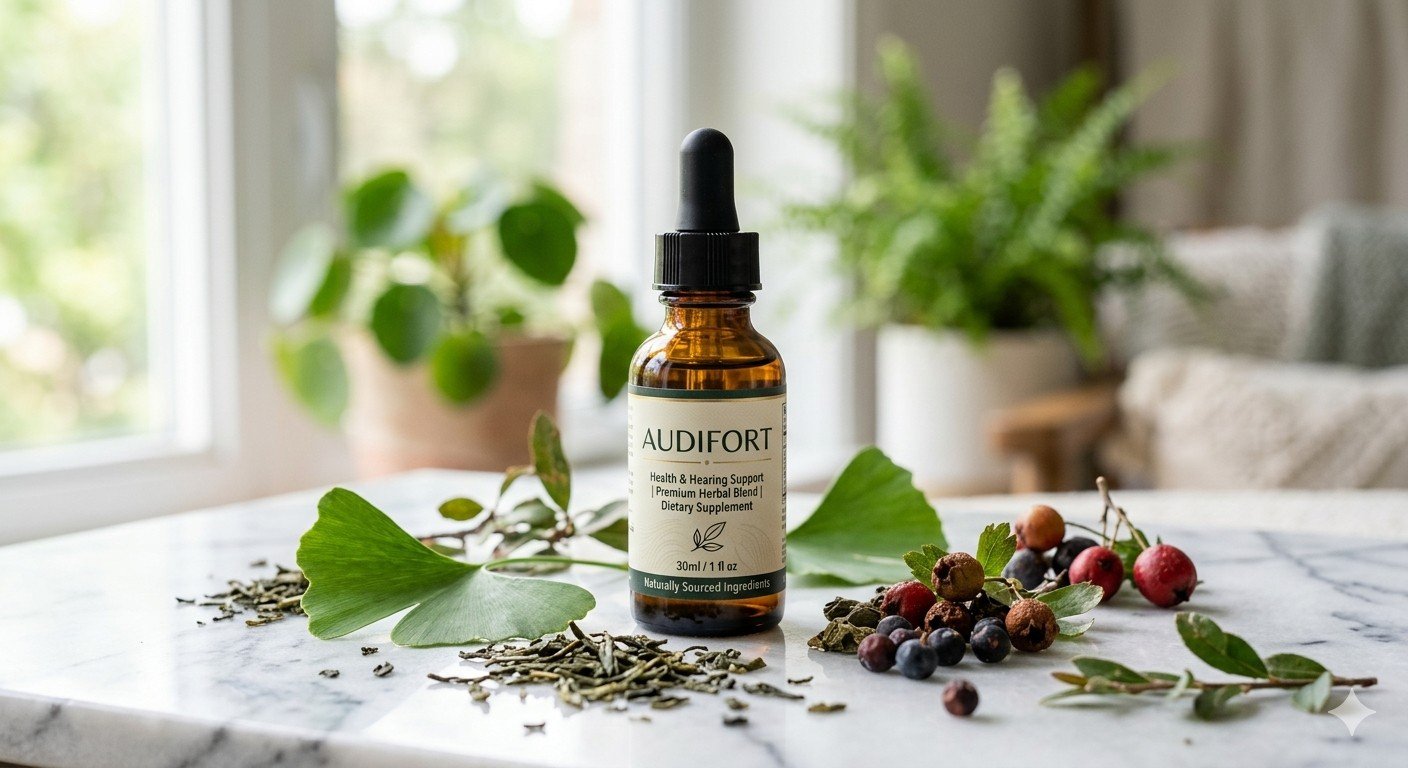
In this review, James Hartwell examines Audifort's ingredient profile against published clinical research, evaluates its potential benefits and limitations, and provides an honest assessment to help you make an informed decision.
Who Is Audifort For?
Based on its formulation and marketing, Audifort appears to target the following groups:
- Adults over 45 experiencing gradual hearing decline
- Individuals dealing with mild to moderate tinnitus (ringing in the ears)
- People looking to support overall auditory and cognitive health naturally
- Those who prefer liquid supplements over pills or capsules
It is not marketed as a treatment or cure for diagnosed hearing conditions such as sensorineural hearing loss, which typically requires medical intervention.
Audifort Ingredient Analysis
The most important factor in evaluating any supplement is the science behind its ingredients. Below, we analyze the key components in Audifort based on published research.
1. Ginkgo Biloba Extract
Ginkgo biloba is one of the most studied herbal extracts for neurological and auditory health. A review published in the Journal of Ethnopharmacology found that ginkgo biloba improves microcirculation, which is directly relevant to cochlear (inner ear) blood flow — a key factor in auditory function.
Several studies have also examined ginkgo's potential role in tinnitus management, with mixed but promising results. A 2022 analysis suggested that standardized ginkgo extract may reduce tinnitus severity in some populations, particularly those with circulatory-related causes.
2. Zinc
Zinc deficiency has been clinically linked to hearing loss and tinnitus. A study published in the American Journal of Otolaryngology found that zinc supplementation in zinc-deficient patients with tinnitus led to measurable improvements in symptom severity. The inner ear contains some of the highest concentrations of zinc in the human body, underscoring its importance for auditory health.
3. Magnesium
Magnesium plays a protective role against noise-induced hearing loss. Research from the American Journal of Otolaryngology demonstrated that magnesium supplementation helped preserve hearing function in subjects exposed to loud noise. Its mechanism involves protecting the hair cells of the inner ear from oxidative stress.
4. Vitamin B12
B12 deficiency is significantly more common in older adults and has been associated with both tinnitus and sensorineural hearing loss. A study in the American Journal of Clinical Nutrition found a correlation between low B12 levels and auditory processing difficulties. Supplementing B12 in deficient individuals may support nerve conduction in the auditory pathway.
5. Alpha Lipoic Acid
Alpha lipoic acid (ALA) is a powerful antioxidant that crosses both the blood-brain barrier and the blood-cochlear barrier. Research suggests it may help protect auditory hair cells from oxidative damage — one of the primary mechanisms behind age-related hearing decline. A study in Antioxidants & Redox Signaling highlighted ALA's neuroprotective properties in sensory systems.
6. Green Tea Extract (EGCG)
Epigallocatechin gallate (EGCG), the primary active compound in green tea, has demonstrated antioxidant and anti-inflammatory effects in multiple studies. Research published in Free Radical Biology and Medicine found that EGCG may help reduce oxidative stress in cochlear tissue, potentially slowing age-related auditory deterioration.
What the Research Says Overall
Taking a step back from individual ingredients, the overall picture is moderately positive. Several of Audifort's core components — particularly ginkgo biloba, zinc, magnesium, and vitamin B12 — have legitimate scientific support for their roles in auditory and neurological health.
However, it is important to note that most studies examine these ingredients in isolation or in clinical populations with diagnosed deficiencies. The effectiveness of a combined formulation like Audifort has not been independently studied in a randomized controlled trial, which limits the strength of evidence-based claims.
This is not unique to Audifort — it applies to virtually all dietary supplements on the market. The ingredient-level evidence is the most reliable proxy available for evaluating potential effectiveness.
Potential Benefits of Audifort
- Auditory support through improved circulation: Ginkgo biloba and magnesium both support blood flow to the cochlea
- Antioxidant protection for inner ear cells: ALA, EGCG, and zinc help neutralize oxidative stress that damages auditory hair cells
- Nerve health and signal transmission: B12 supports the auditory nerve pathway
- Potential tinnitus relief: Zinc and ginkgo have shown promise for tinnitus in specific populations
- Liquid format for faster absorption: Sublingual or liquid delivery may improve bioavailability compared to some capsule forms
Limitations and Considerations
- No independent clinical trial exists for the Audifort formula specifically
- Results will vary significantly based on the underlying cause of hearing issues
- Supplements cannot reverse structural damage to the cochlea or auditory nerve
- Not a substitute for professional audiological evaluation
- Individual results depend heavily on baseline nutritional status
Audifort Complaints: What Users Have Reported
No supplement review would be complete without an honest look at the most common complaints and limitations reported by real users. Based on publicly available feedback and a review of what consumers tend to raise about products in this category, here is a balanced summary of what to be aware of before purchasing Audifort.
1. Results Take Time — and Aren't Guaranteed
The most consistent complaint from users is that Audifort does not produce fast or dramatic results. This is actually consistent with the underlying science — ginkgo biloba, B12, and zinc work gradually through mechanisms like improved microcirculation and nerve support, not acute symptom relief. Users who expect noticeable changes within the first one to two weeks are frequently disappointed.
Realistic expectation: Most research on these ingredients suggests a minimum of 60–90 days of consistent use before meaningful changes can be assessed. Users who stop early may be abandoning the product before it has had a fair trial.
2. Not Effective for All Types of Hearing Loss
Several users with moderate to severe sensorineural hearing loss — the type caused by permanent damage to cochlear hair cells or the auditory nerve — report no meaningful benefit. This is expected: no dietary supplement can regenerate destroyed hair cells or reverse structural nerve damage. Audifort's formula targets nutritional support, circulation, and oxidative stress — mechanisms relevant to functional decline, not structural damage.
If you have been diagnosed with significant sensorineural hearing loss, a supplement like Audifort is unlikely to produce measurable improvement in audiological testing. That does not mean it has no role — it may help support remaining auditory function — but expectations should be calibrated accordingly.
3. Only Available Through the Official Website
Audifort is not sold on Amazon, at pharmacies, or through third-party retailers. Some users express frustration about this, citing concerns about price transparency and reorder convenience. The upside is that purchasing through the official site ensures product authenticity and access to the money-back guarantee — something that cannot be guaranteed through unauthorized resellers.
4. Ginkgo Biloba Interaction Warning
This is one of the more important considerations from a safety standpoint. Ginkgo biloba has a mild blood-thinning effect and can interact with anticoagulant medications such as warfarin, aspirin, and certain anti-inflammatory drugs. Users taking any blood-thinning medication should consult their doctor before using Audifort. This is not a reason to avoid the product for most healthy adults, but it is a genuine precaution worth flagging — and one that does not always appear prominently in marketing materials.
5. No Third-Party Testing Publicly Confirmed
Audifort does not prominently display certificates of analysis (COAs) or third-party lab testing results on its official website. For consumers who prioritize verified purity and potency, this is a legitimate concern. It does not mean the product is unsafe — many legitimate supplement brands operate this way — but it is a transparency gap compared to brands that publish COAs openly.
6. Pricing May Be a Barrier
Single-bottle pricing is on the higher end for this supplement category. Most users who report satisfaction purchased multi-bottle packages, which significantly reduce the per-bottle cost. Given that a proper trial requires at least two to three months of use, the multi-bottle bundles are worth evaluating if you decide to try Audifort.
Summary: Who Should Be Cautious
- Users expecting fast results (under 30 days)
- Those with diagnosed moderate-to-severe sensorineural hearing loss
- Anyone taking blood thinners or anticoagulant medications
- Consumers who require third-party lab verification before purchasing
Who Is Still a Good Candidate
- Adults 40+ with mild, age-related hearing changes or early tinnitus
- Those with nutritional deficiencies (zinc, B12, magnesium) linked to auditory health
- Users willing to commit to a 60–90 day consistent trial
- People who have already ruled out underlying conditions requiring medical care
For a broader comparison of Audifort against a competing supplement in the same category, see: Audifort vs ZenCortex: Which Hearing Supplement Is Right for You?
How Does Audifort Compare to Other Hearing Supplements?
| Feature | Audifort | Typical Capsule Supplement |
|---|---|---|
| Format | Liquid drops | Capsules / tablets |
| Key ingredients | Ginkgo, Zinc, B12, ALA, Magnesium | Varies |
| Absorption speed | Potentially faster (liquid) | Standard |
| Third-party testing | Not publicly confirmed | Varies |
| Suitable for | Adults 40+, tinnitus, age-related decline | General population |
How to Use Audifort
According to the manufacturer's guidelines, Audifort is taken as liquid drops, typically added to water or juice once or twice daily. As with most supplements targeting neurological health, consistent daily use over a minimum of 60 to 90 days is recommended before assessing results.
This timeframe aligns with the general timeline seen in clinical studies examining ginkgo biloba and B12 supplementation, where measurable effects on auditory and cognitive markers typically emerge after 8 to 12 weeks of consistent use.
Is Audifort Worth Trying?
Based on our ingredient analysis, Audifort contains a thoughtfully assembled combination of compounds with legitimate scientific backing for auditory and neurological health support. The inclusion of ginkgo biloba, zinc, magnesium, B12, ALA, and EGCG addresses multiple pathways involved in hearing health — from circulation and antioxidant protection to nerve function.
For individuals over 45 who are experiencing mild hearing changes, occasional tinnitus, or who simply want to support their auditory health proactively, Audifort represents a reasonable option worth considering — particularly for those who prefer liquid supplements and have ruled out underlying conditions requiring medical treatment.
It is not a cure for hearing loss, and anyone experiencing significant or sudden changes in hearing should consult an audiologist or ENT specialist before relying on supplementation alone.
If you decide to try Audifort, the manufacturer typically offers multi-bottle packages with a money-back guarantee, which reduces the financial risk of testing the product.