Before you buy CogniCare Pro, here is the prudent spoiler: this is a six-ingredient nootropic capsule whose formula reads considerably better than the average memory supplement — Bacopa Monnieri, Huperzine A, L-Tyrosine, and Rhodiola all have published research behind them — but there is no clinical trial of the finished product, results arrive over weeks rather than days, and it is sold only through its own website. If those three facts fit what you are looking for, the supplement is worth a closer look. If they don't, nothing inside the bottle will change your mind.
This guide covers what the CogniCare Pro supplement actually is, what is inside it and what the evidence level is for each ingredient, who realistically benefits from it, the concerns we think a careful buyer should weigh, and how we'd approach the purchase decision in 2026. We analyze supplement formulas against published research for a living, and this page is written to be the complete pre-purchase reference — not a sales pitch.
What Is the CogniCare Pro Supplement?
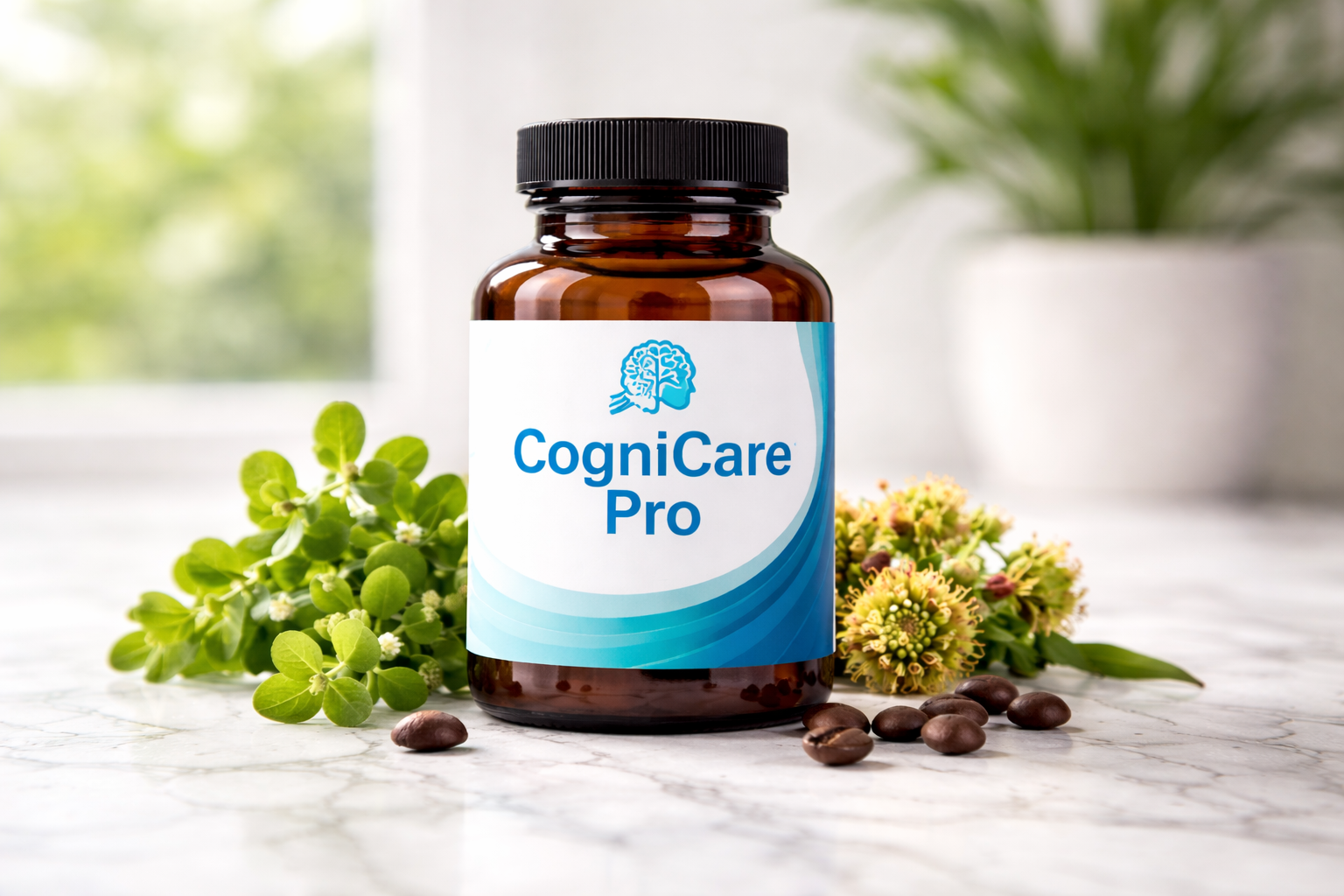
CogniCare Pro is a once-daily dietary capsule designed to support six areas of cognitive function: memory retention, focus, mental clarity, learning ability, stress resilience, and long-term neuroprotection. The formula is credited to Elizabeth Bennett, described as a cognitive health researcher, and it is manufactured in the United States in a GMP-certified, FDA-registered facility using non-GMO, plant-based ingredients.
Two things define what this supplement is trying to be. First, it deliberately avoids stimulant-dominant design — there is no large caffeine dose — so it will not feel like an energy drink in capsule form. Second, it works through mechanisms with defined pharmacology: cholinergic support (Huperzine A), catecholamine precursor supply (L-Tyrosine), adaptogenic stress modulation (Bacopa and Rhodiola), and cerebral circulation (green coffee bean extract and theobromine). That is a coherent design. It is also a design whose benefits are cumulative, not immediate.
What's Inside CogniCare Pro: The Six Ingredients
Because a supplement is only as credible as its label, here is each active ingredient with what published research supports and where the evidence gets thin.
Bacopa Monnieri
One of the most researched botanical nootropics in existence. Its bacoside compounds have been studied for memory consolidation and verbal learning, and a systematic review in the Journal of Ethnopharmacology reported memory improvements in adults supplementing for around 12 weeks. This is the formula's memory anchor, and its strongest clinical leg. Evidence level: multiple randomized trials and systematic reviews.
Huperzine A (from Huperzia Serrata)
Inhibits acetylcholinesterase, the enzyme that breaks down acetylcholine — a neurotransmitter essential for learning and memory. Preserving acetylcholine supports memory-circuit signaling, and the compound has been studied in the context of age-related cognitive decline. Evidence level: clinical and preclinical research; strong mechanistic grounding, thinner evidence in healthy adults.
L-Tyrosine
A precursor to dopamine and norepinephrine. Trials published in Psychopharmacology show it supports working memory and cognitive flexibility under stress and fatigue. The caveat that matters: the documented benefit is under depleted conditions. If you are well rested, do not expect a dramatic effect from this ingredient alone. Evidence level: good randomized-trial support for stress-state performance.
Rhodiola Root
An adaptogen with clinical research showing reduced mental fatigue and better performance on demanding cognitive tasks under stress. It supports neurotransmitter communication and brain energy metabolism, and it carries much of the formula's anti-brain-fog claim. Evidence level: several randomized human trials.
Green Coffee Bean Extract
Supplies chlorogenic acids and a small amount of natural caffeine. Its role is antioxidant protection for neurons and support of cerebral blood flow. The caffeine component is modest by design — steadier than a cup of coffee rather than stronger. Evidence level: well-established caffeine effects; chlorogenic-acid cognitive data is thinner.
Theobromine
A mild methylxanthine from cacao with a smoother, longer stimulation profile than caffeine and a documented effect on cerebrovascular blood flow. It rounds out the circulation focus of the formula. Evidence level: established pharmacology, limited outcome-specific trials.
What the CogniCare Pro Supplement Is Not
Setting expectations is half of an honest supplement review, so plainly: it is not a medication, and dietary supplements are not FDA-approved to treat, cure, or prevent any condition. It is not a stimulant — do not expect an immediate alertness hit. And it is not a substitute for sleep, exercise, or diet; the research underlying its ingredients consistently shows they interact best with an already-functional lifestyle. No independent randomized trial exists for the CogniCare Pro formula as a whole — the ingredient-level evidence is the best available proxy, and we treat it as exactly that.
Who Benefits Most from CogniCare Pro
The supplement is aimed at adults whose complaints match its mechanisms:
- Adults over 35 with age-related memory concerns or slower mental recall
- Professionals under sustained cognitive demand who run out of mental stamina by mid-afternoon
- Students who need consistent focus and retention over long study periods
- People with persistent brain fog connected to stress, fatigue, or circulation rather than an acute medical problem
Notice what is not on that list: people who want faster thinking tomorrow, people treating a diagnosed memory disorder, and anyone whose sleep runs four hours a night. No capsule compensates for those deficits, and this one does not pretend to.
Concerns to Weigh Before Buying
Results are slow by design
The most common source of buyer regret for this category is timeline. The realistic expectation, grounded in the ingredient research, is noticeable focus improvement after 3–4 weeks and fuller benefits after 2–3 months of daily use. Bacopa's own clinical trials ran about 12 weeks. If you cannot commit to a multi-month daily habit, this supplement will look like it "didn't work" — when what actually happened is that the timeframe never got tested.
No retail presence
CogniCare Pro is sold through its official website only. That is deliberate on the manufacturer's side, and it cuts both ways for you: it keeps the supply chain controlled (which matters for a capsule whose ingredient integrity is the whole point), but it also means you cannot pick it up at a pharmacy, compare shelf prices, or reorder on impulse anywhere else. Any listing on a third-party marketplace is outside the authorized channel and carries counterfeit risk — a documented problem in the supplement industry generally.
Individual response varies
Every claim above is probabilistic. Baseline diet, sleep, age, and stress all modulate how much a cholinergic or adaptogenic intervention shows up for a given person. We think the best purchase framework is: decide in advance what "worked" looks like at the end of a full evaluation window, and use the manufacturer's money-back guarantee — terms confirmed on the official store before ordering — as your risk buffer if the answer after that window is no.
How the Supplement Is Taken
One capsule daily, roughly 20 minutes before a meal, with a full glass of water. Morning or midday dosing suits the mild stimulant components; late-evening dosing is best avoided if caffeine affects your sleep. Consistency is the actual active ingredient here — the people who report the best experiences with formulas like this are the ones who treat it as a standing daily habit rather than something taken when they remember.
Should You Buy the CogniCare Pro Supplement in 2026?
If you are an adult over 35 with mild, lifestyle-compatible memory and focus complaints, a realistic multi-month horizon, and a budget you are comfortable spending on a daily supplement, CogniCare Pro is one of the more defensible options in its category. The six-ingredient formula is coherent, every active has at least ingredient-level published support, and the guarantee lowers your trial risk. Confirm the current price and guarantee terms on the official store at checkout — we do not publish prices because they change.
If you wanted a fast-acting cognitive booster, a pharmacy product, or treatment for a diagnosed condition, this is the wrong purchase — invest those expectations in sleep, a physician visit, or a stimulant-free reality check instead.
Check Current CogniCare Pro Pricing →
CogniCare Pro Supplement FAQ
Is CogniCare Pro FDA-approved?
No — and no dietary supplement is. Supplements are regulated differently from drugs: they are not approved to treat or prevent disease, though this product is manufactured in an FDA-registered facility, which speaks to production standards rather than efficacy. Anyone promising FDA approval for a supplement is misrepresenting how regulation works.
How long should I take the supplement before judging it?
A minimum of two months, ideally three. The ingredient-level trials that back the formula — most notably the Bacopa research — ran approximately 12 weeks. Judging a cumulative-acting formula at week two is a measurement error, not a verdict.
Does the supplement have side effects?
Possible mild ones: digestive discomfort or drowsiness in people sensitive to adaptogens (Bacopa especially), typically reduced by taking the capsule with food, plus a small amount of natural caffeine from green coffee bean extract. Anyone on cholinergic or CNS-active medication should clear it with their doctor first because of the Huperzine A mechanism. See our CogniCare Pro side effects analysis for the full breakdown.
Can I buy CogniCare Pro in stores or on Amazon?
No. The manufacturer sells direct through the official website only, which is the only channel with product authenticity and the money-back guarantee behind it. Treat third-party marketplace listings as unauthorized.
What makes CogniCare Pro different from cheaper memory pills?
Two things we can actually verify from the outside: the label names all six active ingredients instead of hiding doses behind a proprietary blend, and the design is multi-pathway (cholinergic support, adaptogens, circulation) rather than a single stimulant. Whether that multi-mechanism approach is worth the premium to you is a personal call — but at least it can be evaluated, which most cheap blends can't be.