Search results for "Audifort reviews" are a mess in 2026. Landing pages promise regenerated hearing, marketplace listings sell suspect knockoffs, and most "customer feedback" you find reads like it was written by someone who has never held the bottle. If you came here to find out what actual complaints real customers have raised about Audifort — and whether they are dealbreakers — this is the honest version.
We are an independent research desk led by health researcher James Hartwell, and we do not accept the premise that every complaint is a scandal or that every five-star review is proof. Below we consolidate the recurring positive feedback patterns, then spend most of this piece on the four complaints that come up most consistently — slow results, price, the drop format, and limited availability — because those are the critical signals any buyer deserves before spending money.
What Is Audifort, Briefly?
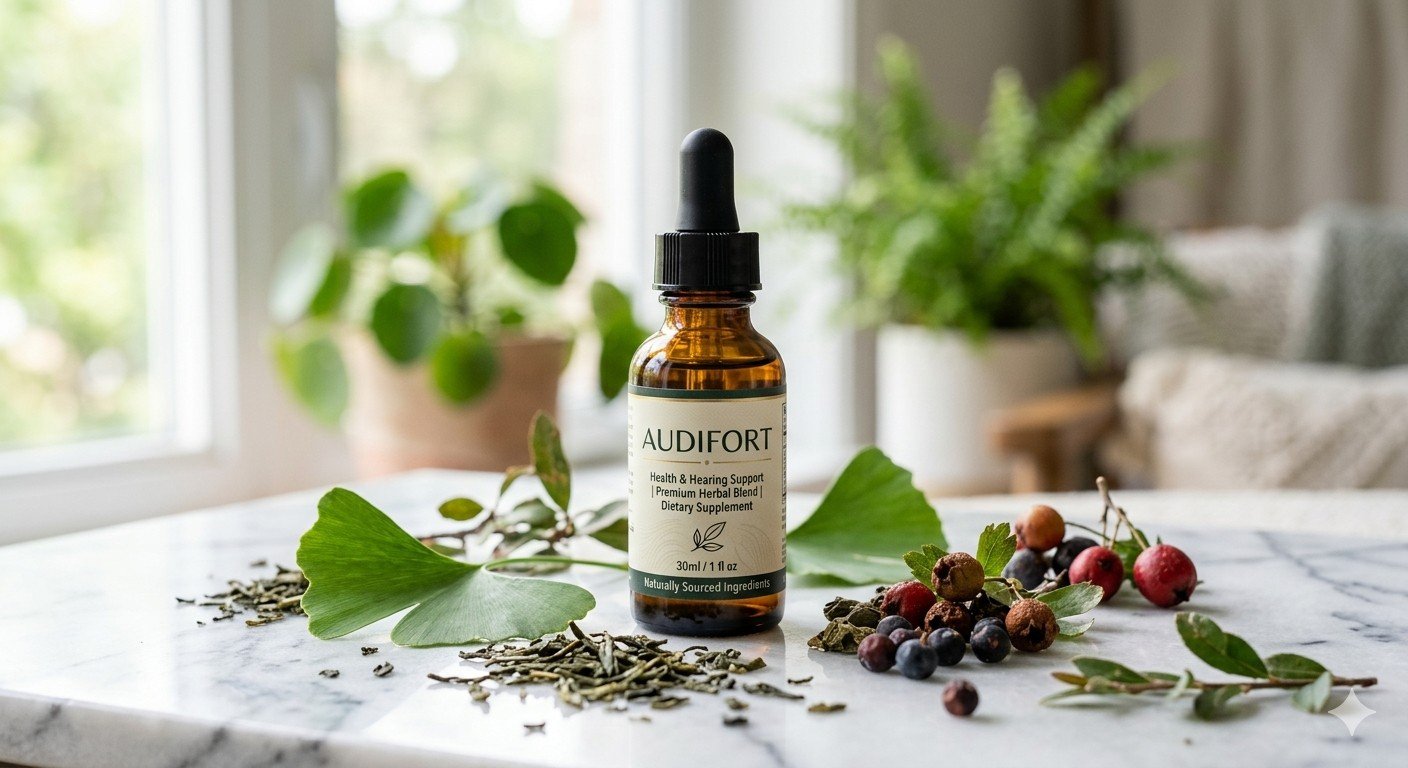
Audifort is a liquid dietary supplement marketed for hearing support — drops taken daily, containing ingredients such as ginkgo biloba, zinc, magnesium, vitamin B12, alpha lipoic acid, and green tea extract. It is sold almost exclusively through its official website, not on Amazon, not in pharmacies, and not through physical retailers. That single distribution choice generates a surprising share of both its complaints and its counterfeit problems, so keep it in mind throughout.
One honesty note before the details: Audifort has never published a randomized controlled trial of its finished formula. Everything below is built from ingredient-level research and publicly available user feedback, both of which are inherently noisier than clinical data.
The Positive Feedback: What Satisfied Users Report
To keep this fair, we start with the recurring positive themes in publicly available user feedback. Treat every one of them as self-reported — we cannot verify individuals' experiences, and supplement anecdotes run both rosy and bleak.
- Gradual improvement in how clear sounds feel: some users, particularly those whose hearing complaints may relate to circulation or nutrient status, report that background "fuzziness" diminished over two to three months
- Reduced tinnitus loudness for some: a subset of users with mild ringing report quieter or less frequent ringing after consistent use — consistent with the mixed-but-real research on zinc and ginkgo in certain populations
- Easy daily routine: many users like that the drops take seconds and avoid swallowing pills, which is a genuine adherence advantage for older adults
- The guarantee experience: buyers who chose to return the product frequently cite that the official refund process worked as advertised — worth noting because a functioning money-back policy is the best consumer protection a product like this offers
- Cheaper as a bundle: satisfied long-term users rarely bought single bottles; the reported value pattern centers on multi-bottle packages
Notice the shape of that list: cautious, gradual, and qualified. Legitimate positive feedback for this category almost always looks like that. If you see claims of overnight healing or "100% restored hearing," you are reading marketing, not a review.
How We Sorted These Complaints
A quick word on method, because "reviews" pages routinely manufacture complaints to sell you the competitor — or delete them to sell you the product. For this piece we drew on three sources only: publicly available customer feedback across forums and social platforms, the structural facts of the product (its distribution model, guarantee terms, and published policies), and the peer-reviewed research on its ingredients. We ignored every review that reads like ad copy and every complaint reduced to a single angry sentence with no detail, because neither type survives the smell test. Where feedback could not be independently verified, we labeled it as a user report rather than a fact.
One more degree of restraint worth stating: none of the figures in this article come from vendor data unless we say so explicitly. Supplement brands publish aggregate satisfaction numbers that no third party has ever audited, and we refuse to launder those as "reviews." Everything here stays within what an outsider can actually check — and tells you plainly when that is not much.
The Real Audifort Complaints
Now the part that actually deserves your attention. Across public feedback, forums, and the friction points we can verify structurally, four complaints recur. None of them is a scandal in itself — but two of them should change how you buy, and one should change whether you buy at all.
Complaint 1: "It's Too Slow — I Saw No Results"
The number-one complaint about Audifort is speed, or the absence of it. Disappointed buyers describe stopping after two or three weeks without noticing any change. Here is the uncomfortable truth we keep repeating: the complaint and the science agree. Ginkgo biloba, B12, zinc, and magnesium work through gradual mechanisms — microcirculation, nerve support, correcting nutritional gaps — and published research on these ingredients generally assesses effects over 8 to 12 weeks. A person quitting at week three has not failed Audifort; the product was never given a fair test under the very timeline its own ingredient research implies.
That said, "slow" is also a legitimate brand-level indictment of supplement marketing. When any hearing supplement sells urgency in a category where relevant science moves in months, part of the disappointment it manufactures is self-inflicted. Others report no change even after the full window — usually because their underlying issue is structural damage no nutrient can reverse. Both outcomes are real, and you cannot know in advance which one you are.
Complaint 2: The Price — Especially for a Proper Trial
Single-bottle pricing on the official site is at the high end for hearing supplements, and buyers flag it. The math gets worse once you internalize complaint 1: if an honest trial requires 60 to 90 days, a single bottle was never the right purchase size, yet it is the entry price point most people try first. Per-bottle costs drop substantially on multi-bottle bundles — pricing on the official site varies by bundle, so we will not quote hard numbers here — and that is where the value conversation actually lives.
Our take is straightforward: if you would only commit to one bottle's worth of days, do not buy any of it. If you are prepared to run the full 90 days, the bundle pricing plus the 90-day money-back guarantee quoted on the official site changes the risk profile meaningfully. Confirm current guarantee and bundle terms yourself at checkout; they are the terms that protect you, not our summary of them.
Complaint 3: The Drop Format Is Inconvenient
A minority of users simply dislike the delivery system. Liquid drops mean measuring doses, handling a small bottle, sometimes mixing into water or juice, and remembering a second daily step. Travelers. People with tremors or grip issues. Anyone who has kept three siblings on a pill organizer will understand the objection immediately — a dropper bottle has no equivalent system, and a missed week quietly invalidates the trial.
Counterpoint: the manufacturer argues liquid delivery supports better absorption, and liquid formats plausibly help with bioavailability for some compounds. Just be honest with yourself about whether you will do the routine. The supplement you actually take beats the theoretically superior one you abandon.
Complaint 4: Not Available in Stores or on Amazon
Some shoppers are annoyed that you cannot add Audifort to an Amazon cart or buy it at a pharmacy. The official reasoning is channel control; the practical consequences cut both ways. Positive: every legitimate purchase comes through one channel, which is why the refund policy is enforceable — and why the brand can strongly, and correctly, warn against any "Audifort" sold elsewhere. Negative: you lose the price comparison and speed of a marketplace, you pay separately for shipping in some cases, and reorders require revisiting the official site.
One warning we will not soften, because it is our most common complaint-adjacent report in 2026: third-party listings and copycat pages. If you see Audifort sold as a "combo pack" on Amazon, eBay, or Walmart marketplace listings, treat those as counterfeit or unauthorized. We documented the full pattern — fake tributary sites, pirated coupon pages, marketplace knockoffs — in our piece on whether Audifort is a scam. Buy through the official channel or not at all.
Minor Grumbles We Also Hear
- No published third-party lab certificates: the brand does not prominently display COAs, which some buyers treat as a transparency dealbreaker
- Ginkgo interaction: users on blood thinners report the warning is easy to miss in marketing materials — we would call the warning understated, but it should be louder
- Marketing volume: even people satisfied with the product describe its advertising claims as inflated relative to what the ingredient science actually says
Check Current Audifort Pricing →
Who Should (and Shouldn't) Buy Audifort
Based on our analysis of the ingredient evidence and the complaint patterns above, here is the honest sorting:
Reasonable candidates: adults 45 and older with mild, slowly progressive hearing changes or occasional, mild tinnitus; people whose diet and labs suggest they may be low in zinc, B12, or magnesium; buyers who are willing to commit to a full 60–90 day trial and who prefer liquid supplements; anyone who has already been medically evaluated and simply wants to try a nutritional support layer.
Poor candidates: anyone expecting visible improvement within 30 days (you will join complaint 1, guaranteed); people with diagnosed moderate-to-severe sensorineural hearing loss, where destroyed hair cells and nerve damage are beyond any supplement's reach; anyone taking anticoagulants such as warfarin without medical clearance, because of the ginkgo interaction; and anyone on a tight budget who resents the price — complaint 2 will ruin the experience even before the results question arrives.
Sudden hearing loss, hearing loss in one ear, dizziness, or ear pain are never supplement territory. Those are same-week medical appointments.
Verdict: Are the Complaints Disqualifying?
In our assessment, the four main complaints about Audifort are real but mostly explainable — preventable mismatch rather than fraud. Slow results reflect how these ingredients genuinely work; the price reflects a premium direct-to-consumer category; the drop format is a preference; and limited availability is the deliberate trade-off for a single controlled channel. The genuinely worrying items are the transparency gaps (no published COAs, no formula-level clinical trial) and the counterfeit ecosystem surrounding the brand, which harm shoppers far more often than the product itself does.
If you fit the candidate profile, the sensible path is a bundled order bought only through the official site, a notes-and-observations trial starting from day zero, and a decision point at day 60 with the guarantee window still open. If you do not fit that profile, the complaints are your preview of disappointments you can skip entirely. If you do buy, the official website is the only channel that honors the money-back guarantee — and that guarantee only protects you if you decide before day 90.
See Audifort's Official Website for Current Pricing →
For a deeper look at the formula itself, see our ingredient-by-ingredient analysis, or read our full Audifort review for 2026.