"Nobel-Prize-Winning Memory Breakthroughs" is how Advanced Bionutritionals markets Advanced Memory Formula, and the phrase deserves to be taken apart before it is believed. Our verdict up front: this is an above-average formula for its category. Eleven nutrients, several of which — phosphatidylserine, bacopa monnieri, acetyl-L-carnitine, ginkgo biloba — carry genuine published research individually, wrapped in marketing that inflates what that research shows. The headline figures ("supercharges mental performance by 44%," "cuts 12 years off your brain age") do not trace to any published trial of the finished product we could identify, the "NeuroFator™" component is never even identified in the sales materials, and the vendor's own scoreboard — 1,530 reviews averaging 4.0, 79% recommending — is good but plainly not universal. For adults over 45 with ordinary age-related word-finding and recall lapses who can commit to a 12-week test window, it is a reasonable, reversible buy with a clear 90-day refund behind it; for anyone on blood thinners or with a diagnosed memory condition, it is a clinician conversation first.
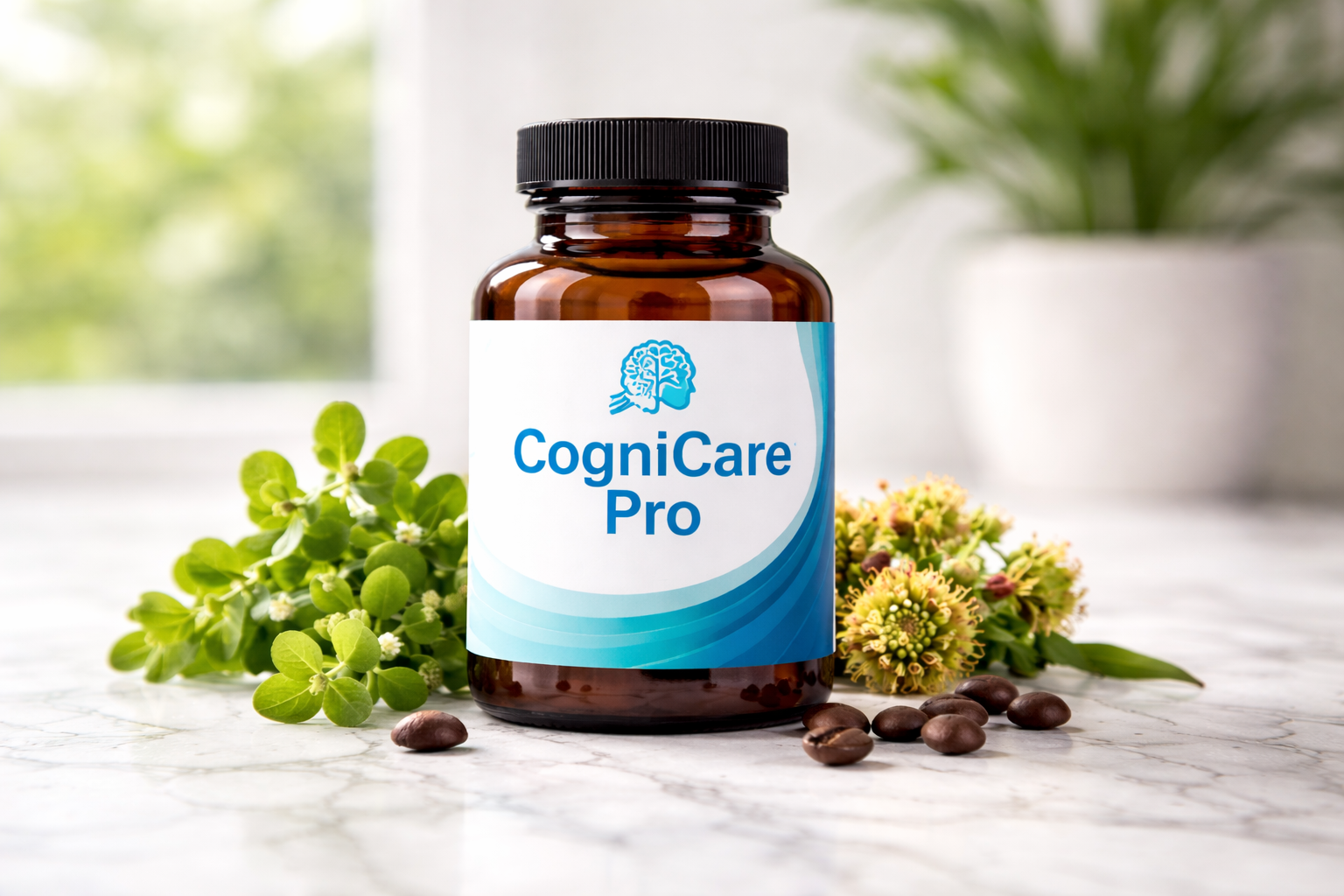
Every marketing claim below is traced to its source, every listed ingredient graded against the published research, and the formula compared directly with CogniCare Pro, the other memory product we have fully reviewed. We may earn a commission if you order through our links; the analysis does not change either way.
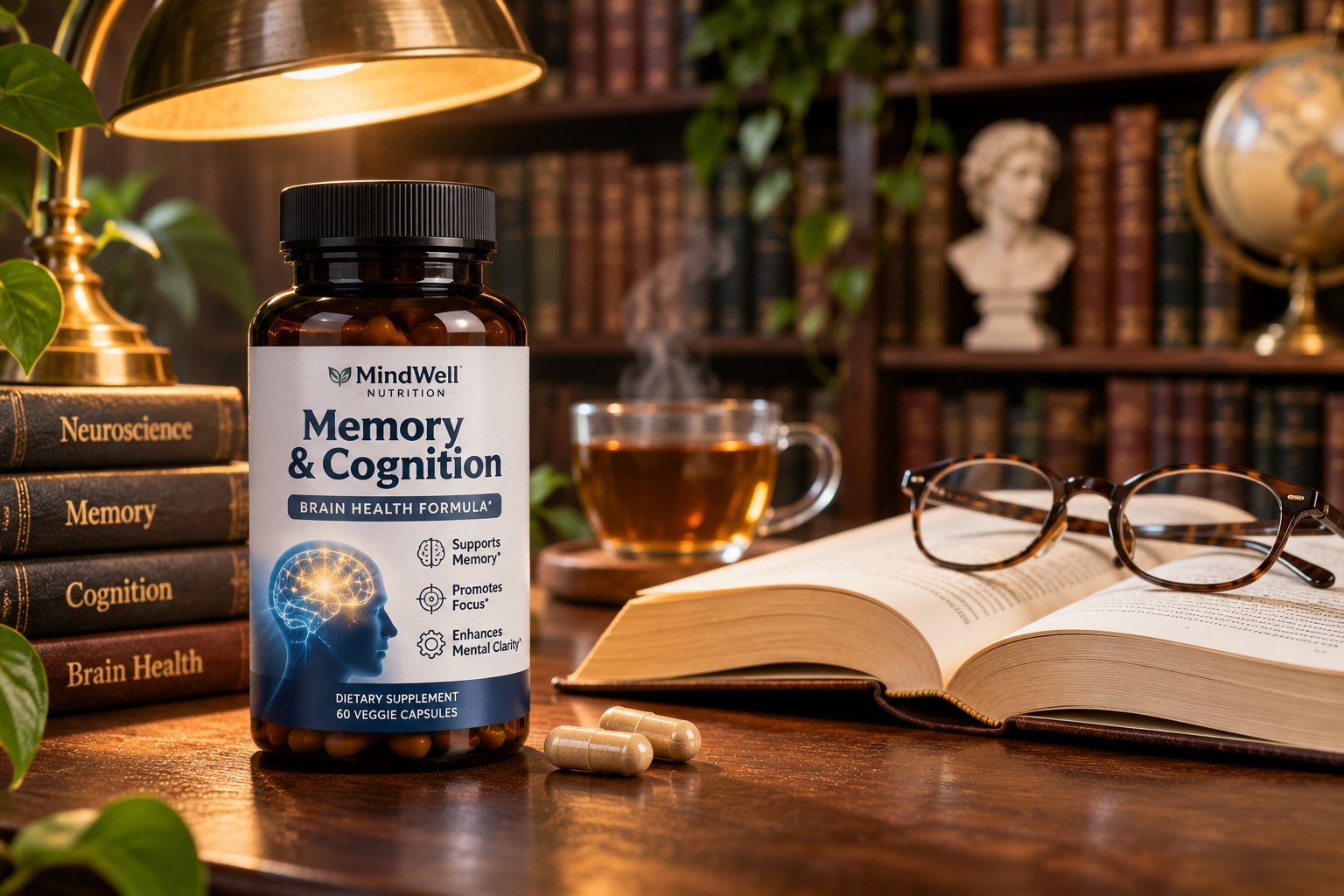
What Advanced Memory Formula Is
Compressed from the vendor's own sales page and FAQ:
- Formula: eleven nutrients in two tablets a day; the page names phosphatidylserine, bacopa monnieri, ginkgo biloba, alpha-GPC, acetyl-L-carnitine, blueberry, luteolin, lecithin, calcium, phosphorus, and a branded NeuroFator™.
- Manufacturing: made in the USA "from globally sourced ingredients" by Formulation Technology, Inc., per the sales page.
- Endorsement: Dr. Frank Shallenberger, an MD the page discloses is compensated for formulating and endorsing the product — a disclosure that matters, because the enthusiasm ("I've never seen anything that supports memory quite like it") is precisely the kind the compensation explains.
- Availability: not in stores, per the FAQ; direct order page or phone only.
- Guarantee: a 90-day "Down-to-the-Last-Pill" refund — empty bottles count, refund includes shipping and handling, buyer pays return shipping — plus a second guarantee promising "an improvement in your memory in as little as 3 weeks. Guaranteed or your money back."
- Official rating: 1,530 reviews, 4.0 average, 79% recommending, published on the vendor's own site.
Decoding the Marketing: Nobel Prizes, BDNF, and Rogue Microglia
What's real. Rita Levi-Montalcini did win the Nobel Prize for discovering nerve growth factor (NGF), and NGF is central to neuronal survival and growth. Eric Kandel, the Nobel laureate the email campaigns cite, is a real memory researcher; the adult brain's plasticity — including BDNF's role as the growth-supporting protein the campaign calls "fertilizer" for new brain cells — is legitimate neuroscience. And the "rogue microglia" story in the emails, with its Northwestern University origin, reflects a genuine, active research area. Nothing here is fabricated biology.
Where it slips. The marketing jumps from "this biology is real" to "this supplement exploits it dramatically" — a step with no published product-level support. The campaign's "one nutrient floods your brain with 143% more BDNF in just 1 hour" and "higher BDNF levels can reduce your risk of cognitive decline by one third" are, as far as we can determine, campaign assertions — we could not trace them to any published clinical trial of Advanced Memory Formula, and no trial of the finished product exists in the literature we reviewed. The product page's phosphatidylserine claims — "supercharges mental performance by 44%" and "cuts 12 years off your brain age" — are equally untraceable to the published PS trials we could access. This is the category's signature move: borrow real molecular biology, attach invented precision, and let the Nobel association do the persuading.
Ingredient by Ingredient: The Evidence, Graded
Our grading: Strong = multiple decent human trials; Moderate = at least one reasonable human study or a well-established mechanism; Weak = mostly mechanistic or preclinical support. One caveat: per-tablet doses aren't printed in the sales materials we reviewed, so we cannot audit whether the formula reaches the doses the underlying trials used — the checkout label settles that.
1. Phosphatidylserine (PS) — Moderate
Several controlled trials and reviews associate PS with modest memory and cognitive improvements in aging adults, generally around 100 mg three times daily over weeks to months. The vendor's figures — 44%, "12 years off your brain age" — appear in no published PS trial we could retrieve. Sensible inclusion; inflated arithmetic.
2. Bacopa Monnieri — Moderate to Strong
"Over 14 studies confirm that bacopa really works," the vendor says — directionally fair: multiple randomized trials of about 12 weeks using standardized extracts around 300 mg daily show improved memory consolidation and verbal recall. Effects build slowly, and gastrointestinal complaints are the herb's most common drawback. One flourish needs correcting: the ads credit "Native Americans" with 6,000 years of bacopa use, but it is an Ayurvedic herb from India — a borrowed pedigree, and a tell about how the marketing treats accuracy.
3. Ginkgo Biloba — Mixed to Modest
The most-studied herbal memory agent of all, and the most misunderstood. A large, multi-year randomized trial published in 2008, with more than 3,000 older adults, found ginkgo did not prevent dementia or cognitive decline in cognitively normal people; trials in those already impaired show small, inconsistent benefits. "Energize your brain and improve mental performance" is the optimistic reading of a mixed literature — and the actual buyers here are cognitively normal. Ginkgo's mild antiplatelet effect returns in "who should avoid."
4. Alpha-GPC — Moderate
Supplies the acetylcholine the campaign's "memory librarian" metaphor gestures at — a real biochemistry point. Modest benefit in some trials of cognitive aging; reasonable inclusion.
5. Acetyl-L-Carnitine (ALC) — Mixed
Early studies for age-related cognitive change were encouraging; larger analyses have not found consistent benefit. "Works even if you're over 100 years old" is an unfalsifiable flourish.
6. Blueberry — Weak to Moderate, wrong mechanism story
Small trials of anthocyanin intake report improvements in some memory measures in older adults — a reasonable footing. But the copy's story that blueberry "breaks down fatty deposits" in the brain is not what that literature describes; the actual work concerns anthocyanins, cerebral blood flow, and signaling. Right ingredient, wrong textbook.
7. NeuroFator™ — Unverifiable, by design
Described as "the first natural compound shown in studies to increase BDNF in humans" — without ever saying what it is. We decline to grade an unidentified input, and you shouldn't let an anonymous branded ingredient carry your decision; if identity and dose matter, ask the vendor for the label first. Until then, this is a trust question, not a science question.
8–11. Luteolin, Lecithin, Calcium, Phosphorus — Weak as memory contributors
Luteolin's NGF angle is mostly preclinical; lecithin's membrane support is real but diluted; calcium "helps form memories" generalizes synaptic signaling biology into a dietary claim it doesn't support; phosphorus "brain wiring" is filler. Harmless at sensible amounts; none justifies the price alone.
Net assessment: a classical, rational memory stack — cholinergic support (alpha-GPC, lecithin), membrane integrity (PS), circulation (ginkgo), consolidation (bacopa) — with honest weak points: an undisclosed branded compound, a misdescribed blueberry mechanism, unsourced headline numbers, and no independent trial of the finished formula.
One diagnostic check first: confirm the problem is memory. Age-related hearing strain can impersonate it — conversations you can't quite hear feel like names you can't recall. If that rings true, our does-ZenCortex-work analysis covers the evidence on the hearing side of that confusion.
What Users Actually Report
The vendor's counter — 1,530 reviews, 4.0 average, 79% recommending — is the most candid artifact attached to this funnel, with its own asterisk: testimonial results "may not reflect the typical purchaser's experience," and vendor-curated storefront reviews are a partial view — there's no independent pool to audit, since the product isn't on major marketplaces. Recurring themes: faster recall and answers, clearer thinking ("no more fog"), steadier focus, plus a few specifics like dream recall and balance confidence. Users report gradual improvement most consistently over weeks to months; results vary — and any transformation-inside-a-week story deserves the skepticism you'd apply to the ads.
Complaints, Caveats, and Fine Print
- Timeline doublespeak. The FAQ says "many people will notice a stronger memory and more mental clarity within the first week" while the usage advice is a trial of "at least 3 months." Read the first as best case, the second as the honest window.
- Bundle economics outpace the guarantee. The order page pushes multi-bottle savings; since the 90-day refund runs from purchase, larger stacks extend beyond it — judge the six-bottle order on trial logic, not unit discount.
- Refund terms are friendly but not free. Empty bottles count within 90 days, refunds include shipping and handling, and you pay return shipping — reasonable, not costless.
- One purchase channel. Not in stores, per the FAQ; direct page or phone only, and marketplace listings would be unauthorized — and outside the guarantee.
- The legal ceiling. The page's FDA disclaimer — statements not evaluated by the agency, no diagnosis or cure intended — is the regulatory frame over every claim above, including ours.
- The review ecosystem. As with this company's companion product, commission-fueled affiliate promotion guarantees a dense web of promotional "reviews." Anchor to sources or don't anchor at all.
Who Should Avoid Advanced Memory Formula
- Anyone on prescription blood thinners (warfarin, apixaban, regular aspirin) without prescriber approval — ginkgo's mild antiplatelet effect has a real interaction literature.
- Anyone on cholinergic medications, including dementia drugs like donepezil — adding a cholinergic precursor on top is a prescriber-level decision.
- Pregnant or nursing — no product-specific safety data exists.
- Surgery within about two weeks — stop blood-surface-active supplements and consult the surgical team.
- Anyone with a diagnosed memory disorder — a supplement is never a replacement for clinical evaluation, and new or worsening memory loss always merits a medical workup first.
Bacopa's gastrointestinal gripes — the most common complaint about this ingredient class — are usually manageable with food; worth knowing before an empty-stomach first dose talks you out of the trial.
Advanced Memory Formula vs CogniCare Pro
Readers of our CogniCare Pro review frequently ask how the two formulas compare — the honest side-by-side:
- Origin: AMF is an eleven-nutrient formula by Advanced Bionutritionals; CogniCare Pro is a different company's six-ingredient blend with an adaptogen core and a small natural caffeine load (green coffee bean, theobromine).
- Mechanism center of gravity: AMF works classical memory pathways — acetylcholine supply, membrane integrity, circulation, consolidation. CogniCare Pro aims at stress-and-fatigue-mediated focus with a mild stimulant assist.
- Evidence class: both share the category's structural weakness — no independent published trial of the finished product for either. AMF's PS/bacopa/ginkgo trio has the longer individual history; CogniCare Pro's overlap (bacopa, rhodiola-type adaptogens) is real but narrower.
- Timeline: comparable — weeks to months; CogniCare Pro's small caffeine load is the only short-acting component in either, and neither yields same-day results.
- Fit: word-finding and recall slowing at 50+ is the classical AMF scenario; stress-laden afternoon attention is CogniCare Pro's adaptogen territory — and its caffeine is a benefit or a dealbreaker depending on how you sleep.
- Choosing between them: mechanism fit first, then label transparency, then price — each store determines its own figures, so validate at checkout rather than trusting any printed number.
Either way, our best-supplements guide rates the single, best-studied nutrients on their own merits — for a tight budget, one well-dosed bacopa extract often beats a proprietary eleven-header that can't publish its doses.
Check Current Advanced Memory Formula Pricing →
Advanced Memory Formula FAQ (2026)
How long does Advanced Memory Formula take to work?
The guarantees imply the honest answer: improvement "in as little as 3 weeks" is the promised minimum, and the FAQ advises at least 3 months for the fuller effect. The bacopa trials behind the formula's most-studied ingredient ran about 12 weeks — the scientific floor for its strongest claims.
Is Advanced Memory Formula safe?
No reports of serious side effects from the vendor's customer base, and the individual ingredients have long histories at studied doses. The realistic safety question is interaction, not toxicity: ginkgo and blood thinners, alpha-GPC and cholinergic prescriptions — a clinician conversation if you take either class.
Can I take it with blood thinners or blood pressure medication?
Ginkgo's mild antiplatelet effect makes the blood-thinner question genuinely necessary, not boilerplate — ask the prescriber who manages it. No established mechanism-level conflict with most blood pressure medications, but the same call settles it.
Why isn't Advanced Memory Formula sold in stores?
Selling direct is a margin decision, not a quality guarantee; it also means marketplace listings sit outside the company's refund terms. If you buy, buy direct so the guarantee applies.
What if Advanced Memory Formula doesn't work for me?
The "Down-to-the-Last-Pill" guarantee covers empty bottles within 90 days, refunds include shipping and handling, and you pay only return shipping — among the friendlier terms in this category. Plan your judgment date against the start date, since a fair 3-month trial brushes that window.
Final Verdict
Advanced Memory Formula is above the floor of its category and below the ceiling of its own marketing. The grade column is real: a classical, individually defensible ingredient set, US manufacturing through a named firm, candid disclosure that the endorsing physician is paid, one of the clearest refund policies we've reviewed, and an official 4.0/79% consumer record with its own hedging disclaimer attached. The marketing column is inflated: no independent trial of the finished formula exists, the 44% and "12 years" figures are unsourced, the BDNF and microglia narratives borrow proven science to imply proven products, NeuroFator™ won't say what it is, and the per-tablet doses aren't auditable anywhere in the public materials. If your memory lapses are ordinary aging ones and you can commit to a 12-week window with a written judge-date, it is a reasonable, reversible bet. Blood thinners, cholinergic prescriptions, or new and worsening lapses change that answer to a clinician conversation first.