Audifort is still one of the most-searched hearing supplements in the United States in 2026, and it remains sold through a single direct-to-consumer channel rather than Amazon or retail stores. We first reviewed this formula in 2024, and this updated review reflects what our team — led by independent health researcher James Hartwell — has learned since, including shifts in the supplement market and the honest feedback patterns we keep seeing from users.
This is not a sponsored write-up and it is not a miracle announcement. Audifort sits in a category where marketing routinely outruns the science, so our approach is the same one we apply to every product we cover: we break down the ingredient evidence, weigh it against realistic timelines, and flag exactly who this product makes sense for — and who should save their money. Here is our full 2026 assessment.
What Is Audifort in 2026?
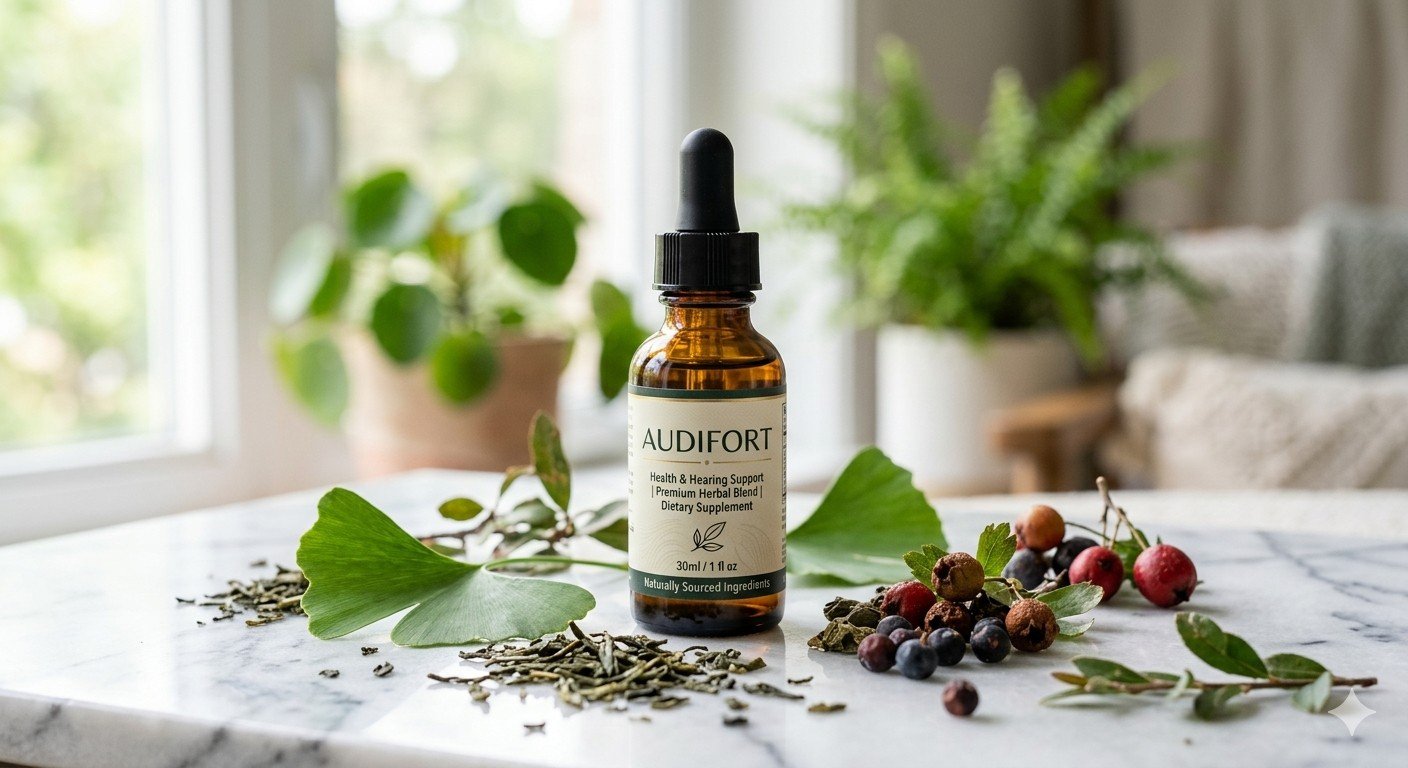
Audifort is a liquid dietary supplement formulated to support hearing health and auditory function. It is positioned as a natural option for adults dealing with age-related hearing decline, occasional ringing in the ears (tinnitus), and difficulty processing sounds clearly. In 2026 it is still distributed primarily through its official website, which is the only guaranteed-authentic purchasing channel — a detail that matters more than it sounds (more on that below).
The supplement comes as liquid drops, which the manufacturer says improves absorption compared with traditional capsules. Each bottle contains a blend of plant extracts, vitamins, and minerals that have each been studied individually for roles in neurological and auditory health. The formula has not been tested as a finished product in any published randomized controlled trial — and no independent clinical study of the exact Audifort blend surfaced between our original review and this 2026 update. That remains the single biggest evidence limitation, and we want it stated plainly before anything else.
What has changed in 2026 is the market around it. A wave of copycat listings, fake "combo packs" on third-party marketplaces, and scam-style landing pages impersonating the brand now surrounds virtually every successful direct-to-consumer supplement. That environment is precisely why we recommend buying only through the official site and only after confirming current guarantee terms at checkout.
Who Is Audifort For?
Based on its formulation and how it is marketed, Audifort targets these groups:
- Adults over 45 experiencing gradual age-related hearing changes
- Individuals with mild to moderate tinnitus (ringing in the ears)
- People who want to support overall auditory and cognitive health naturally
- Those who prefer liquid supplements over pills or capsules
It is not marketed as a treatment or cure for diagnosed hearing conditions such as sensorineural hearing loss, which typically requires medical intervention. If a seller tells you otherwise, you are not dealing with the legitimate product.
Audifort Ingredient Analysis (2026)
The most important factor in evaluating any supplement is the science behind its ingredients. Below we walk through the key components and the level of evidence behind each. For a much deeper dive, we also have a dedicated breakdown: Audifort Ingredients: What's Inside the Drops.
1. Ginkgo Biloba Extract
Ginkgo biloba is one of the most studied herbal extracts in this field. Published reviews in journals such as the Journal of Ethnopharmacology describe its effect on microcirculation, which is directly relevant to cochlear (inner ear) blood flow — a legitimate factor in auditory function. Studies on ginkgo for tinnitus are mixed: some analyses suggest standardized extracts may reduce tinnitus severity in certain populations, while others find no significant benefit. We grade this ingredient as plausible with mixed human evidence — worth including, not proven as a standalone remedy.
2. Zinc
Zinc deficiency has been clinically linked to hearing loss and tinnitus, and research published in the American Journal of Otolaryngology reported measurable symptom improvement in zinc-deficient patients with tinnitus who received supplementation. The inner ear holds some of the highest zinc concentrations in the body. For people with low zinc status, this is one of the better-supported ingredients in the formula; for those with adequate levels, the expected benefit is smaller.
3. Magnesium
Magnesium has genuine protective research behind it, particularly against noise-induced hearing loss. Studies published in the American Journal of Otolaryngology showed magnesium supplementation helped preserve hearing function in subjects exposed to loud noise, likely by protecting the cochlea's hair cells from oxidative stress. The caveat: that evidence applies to noise exposure contexts, not to reversing existing age-related decline.
4. Vitamin B12
B12 deficiency is significantly more common in older adults and has been associated with both tinnitus and auditory processing difficulties. A study in the American Journal of Clinical Nutrition found correlations between low B12 levels and impaired auditory processing. Supplementing B12 supports nerve conduction in the auditory pathway — but mainly in people who are actually deficient. Older adults, long-term metformin users, and strict vegetarians are the groups where this ingredient is most likely to matter.
5. Alpha Lipoic Acid
Alpha lipoic acid is an antioxidant that crosses both the blood-brain barrier and the blood-cochlear barrier. Research suggests it may help protect auditory hair cells from oxidative damage — one of the primary mechanisms behind age-related hearing decline. Much of the strongest data is preclinical; human evidence in this specific application is preliminary. We grade it promising but unproven.
6. Green Tea Extract (EGCG)
Epigallocatechin gallate has demonstrated antioxidant and anti-inflammatory effects across many studies, including research in Free Radical Biology and Medicine on reducing oxidative stress in cochlear tissue. As with ALA, the cochlea-specific data is largely from animal and laboratory models. It is a reasonable inclusion, nothing more.
What the Research Says Overall
Taking a step back from individual ingredients, the overall picture in 2026 remains moderately positive with clear ceilings. Several of Audifort's core components — ginkgo biloba, zinc, magnesium, and vitamin B12 — have legitimate scientific support for their roles in auditory and neurological health, especially in people whose issues connect to circulation, oxidative stress, or nutrient deficiency.
However, most studies examine these ingredients in isolation, often in clinical populations with diagnosed deficiencies. The effectiveness of the combined Audifort formulation has still never been tested independently in a randomized controlled trial. That limits how strongly any reviewer — ourselves included — can claim the finished product "works." Ingredient-level evidence is the most reliable proxy available, and by that proxy Audifort is a sensible but unproven formula.
Potential Benefits of Audifort
- Auditory support through improved circulation: ginkgo biloba and magnesium both support blood flow to the cochlea
- Antioxidant protection for inner ear cells: ALA, EGCG, and zinc help neutralize oxidative stress that damages auditory hair cells
- Nerve health and signal transmission: B12 supports the auditory nerve pathway
- Potential tinnitus relief: zinc and ginkgo have shown promise for tinnitus in specific populations — qualified by mixed results
- Liquid format: liquid delivery may improve bioavailability for some compounds compared with certain capsule forms
If you have already decided to try it, buy the smallest sensible bundle and judge it against the 60–90 day research timeline, not a two-week window.
Check Current Audifort Pricing →
What to Realistically Expect After 60 Days
Because our readers frequently ask what "honest results after 60 days" actually means, let us be precise about what the evidence supports — and what only theory supports. The timeframe itself is defensible: clinical research on ginkgo biloba and B12 generally processes auditory and cognitive markers over 8 to 12 weeks, so a 60-plus-day trial window is the minimum fair test.
What users report publicly, with the usual uncertainty of self-reported data, falls along a predictable spectrum. Some report reduced tinnitus loudness or less "cluttered" sound processing after two to three months of consistent use. Others report no noticeable change at all — and the most common reason is that their hearing issue stems from structural damage no supplement can touch. We have not run our own lab trial of Audifort, and we will not pretend a bottle of drops regenerated anyone's hair cells. What we can say is that the ingredient science is consistent with gradual, modest support — not dramatic recovery.
Realistic expectations, calibrated:
- Weeks 1–4: little to no noticeable change; anyone promising otherwise is selling to you, not informing you
- Weeks 5–8: the window where subjects deficient in zinc, magnesium, or B12 are most likely to feel something
- Weeks 9–12: the honest assessment point; if nothing has changed by then, continued use is unlikely to deliver
Audifort Complaints: What Users Have Reported
No review would be complete without the friction points. The complaints we see raised most consistently about Audifort fall into four buckets:
- Slow results: the most common complaint, and scientifically unsurprising — these ingredients work through gradual mechanisms
- Price: single-bottle pricing is high for the category; per-bottle costs drop substantially on multi-bottle bundles
- Drop format: some users simply dislike measuring liquid doses or carrying a dropper bottle
- Availability: it is not sold on Amazon or in stores, which some shoppers find inconvenient
We cover every one of these in depth in our dedicated piece on Audifort reviews and customer complaints. Two further caveats deserve repeating here: ginkgo biloba has a mild blood-thinning effect and interacts with anticoagulants like warfarin and aspirin, so check with your doctor if you take blood thinners. And Audifort does not prominently publish third-party certificates of analysis on its site — a transparency gap, not proof of a problem.
Who Should Avoid Audifort
Our updated review would be incomplete without a straight answer on the other side of the ledger. We recommend the following groups skip Audifort or get medical clearance first:
- Anyone with moderate-to-severe diagnosed sensorineural hearing loss: destroyed cochlear hair cells and damaged auditory nerves cannot be regenerated by nutrition; see an audiologist or ENT instead
- People taking blood-thinning or anticoagulant medication: the ginkgo interaction is real and requires medical approval first
- Anyone expecting fast or dramatic results: if you need noticeable improvement within 30 days, this formula will almost certainly disappoint you
- People on a budget who cannot commit to a 60–90 day trial: buying one bottle, giving up at week three, and quitting is the most expensive way to use this product
- Anyone experiencing sudden hearing loss, dizziness, or one-sided hearing changes: these are medical symptoms, not supplement situations — seek care immediately
Audifort vs Other Hearing Supplements
Hearing supplements multiplied through 2024–2026, so the fair question is how Audifort stacks up. We compared it against the two broad alternatives most US buyers consider: typical capsule-based supplements and other direct-to-consumer drop formulas (such as ZenCortex, which we covered separately in our Audifort vs ZenCortex comparison).
| Feature | Audifort | Typical Capsule Supplement |
|---|---|---|
| Format | Liquid drops | Capsules / tablets |
| Core ingredients | Ginkgo, zinc, magnesium, B12, ALA, EGCG | Varies; often fewer auditory-specific actives |
| Absorption argument | Potentially faster (liquid) | Standard |
| Published formula trial | No | Almost universally no |
| Guarantee | 90-day money-back (per official site) | Varies |
| Availability | Official website only | Retail and online |
Setup against the general field, Audifort's ingredient list is more targeted than the average capsule supplement, which often relies on generic "brain health" blends with doses too low to matter. Against its direct drop-format competitors, the honest answer is that none of them — Audifort included — has published a clinical trial of the full formula, so differences between them come down to ingredient transparency, guarantee strength, and price rather than proven efficacy.
Two practical notes from our 2026 analysis. First, pricing on the official site varies by bundle: single bottles cost the most, while multi-bottle packages are the only economical way to fund a real two-to-three-month trial. Second, the guarantee window is genuinely relevant here — a 90-day money-back period conveniently covers the full research-supported trial timeline, which means a cautious buyer can judge results without eating the full cost. Confirm the current terms yourself at checkout, since promo conditions can change.
How to Use Audifort
According to the manufacturer's guidelines, Audifort is taken as liquid drops, typically added to water or juice once or twice daily. Consistent daily use over a minimum of 60 to 90 days is the manufacturer-recommended and research-aligned window for assessing results. We would add a documentation habit our analysts recommend for any supplement trial: note your baseline symptoms in week one, keep notes every couple of weeks, and compare honestly at day 60. Self-reported baselines are unreliable when reconstructed from memory.
Is Audifort Worth Trying in 2026? Our Verdict
Based on our ingredient analysis, Audifort remains a thoughtfully assembled formula with legitimate scientific backing behind most of its components — ginkgo biloba, zinc, magnesium, B12, ALA, and EGCG address multiple hearing-relevant pathways from circulation and antioxidant protection to nerve function. It is not a cure for hearing loss, it has not been independently clinically tested as a formula, and it will do nothing for structural damage. Within those limits, for adults over 45 with mild hearing changes or occasional tinnitus who have already ruled out conditions requiring medical care, it is a reasonable option to trial — especially for those who prefer liquid supplements.
The risk-reward math is manageable: the official 90-day guarantee covers the fair trial window, bundle pricing lowers the per-month cost, and the main real risks are wasted time for unsuitable candidates and the ginkgo interaction for people on blood thinners. If you meet the candidate profile and manage your expectations, that math works. If you do not, spend the money on an audiological exam instead — it will teach you more about your hearing than any supplement page will.
Check Current Audifort Pricing →
For more angles on this category, read our breakdown of real customer complaints, our evidence check on whether Audifort is a scam, or our full ingredient analysis.