ZenCortex has been on the market long enough that the early hype has faded, and what's left is the more useful question: after all the advertising, what does this supplement actually deliver? Marketed as a dual-action formula targeting both auditory function and mental clarity, it has attracted two very different audiences — adults over 40 worried about hearing sharpness, and people battling cognitive fog — and those two groups have not had identical experiences with it.
In this updated review, James Hartwell re-examines every ingredient in ZenCortex against published clinical research, takes a hard look at the complaints users continue to report in 2026, and compares the formula head-to-head with Audifort. To be upfront: we have not run a clinical trial, and we don't present buyer anecdotes as proof. We have ingredient-level evidence, published research, and a realistic read of the gap between marketing and biology.
What Is ZenCortex?
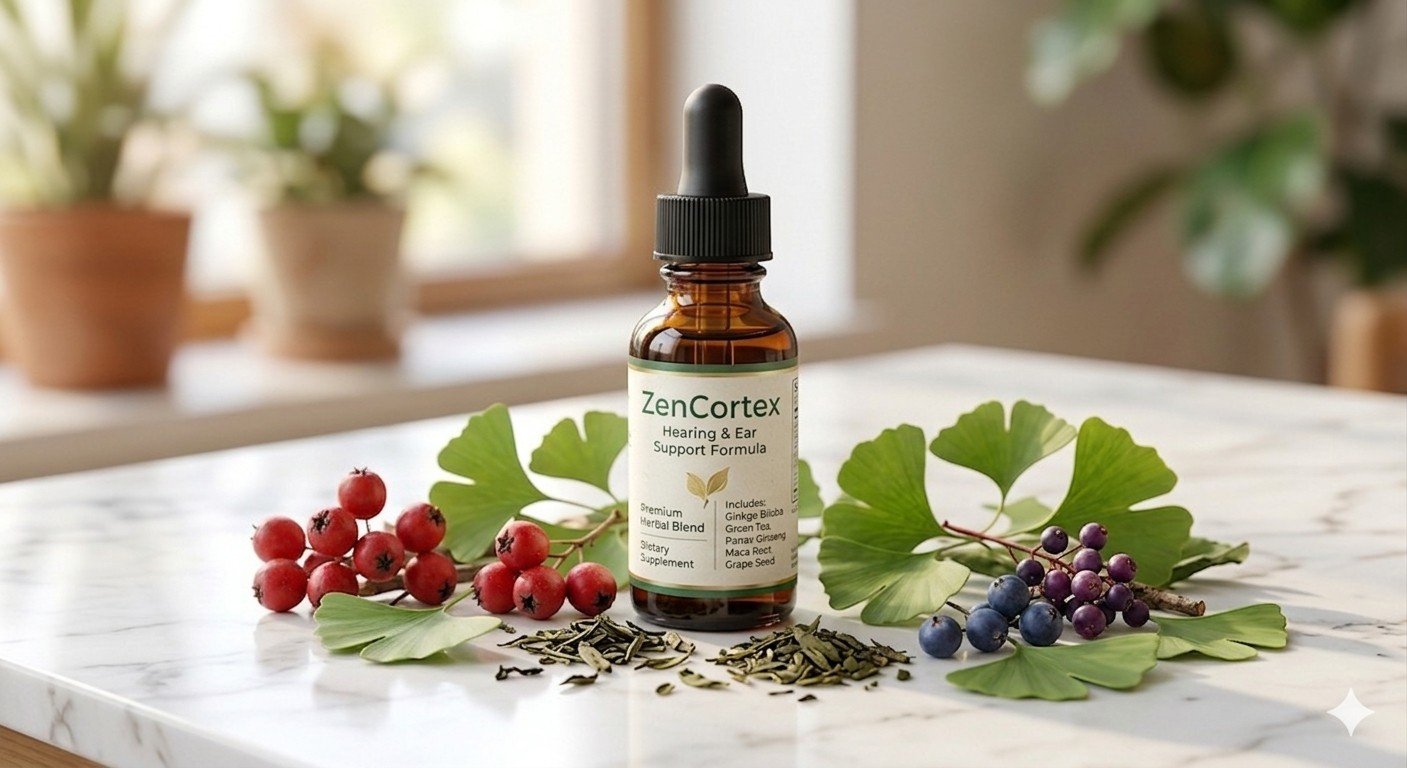
ZenCortex is a liquid dietary supplement delivered in dropper form, designed to be taken daily mixed into water or juice. Its formula targets two interconnected health systems — the auditory system and the central nervous system — which makes it somewhat unusual among supplements that focus exclusively on one or the other.
The rationale behind this dual approach is scientifically grounded: hearing processing does not end at the ear. Sound signals travel through the auditory nerve to the brain, where they are interpreted, filtered, and stored. Cognitive decline and hearing decline often co-occur in aging adults, sharing common mechanisms including oxidative stress, reduced circulation, and neuroinflammation.
ZenCortex's formula attempts to address both pathways simultaneously through a combination of antioxidant-rich plant extracts, neuroprotective compounds, and circulatory support nutrients.
Who Is ZenCortex For?
- Adults over 40 experiencing early signs of hearing decline or difficulty processing speech
- Individuals with occasional tinnitus (ringing in the ears)
- People experiencing cognitive fog, difficulty concentrating, or mild memory concerns
- Those looking for a natural, liquid-format supplement for combined brain and auditory support
- Individuals who prefer a proactive approach to sensory and cognitive wellness
What Changed in 2026?
Short answer: the formula itself appears essentially unchanged — the same core plant extracts and minerals we analyzed when we first published this review remain on the label. What has changed is everything around it, and that is worth several hundred words.
First, the buyer feedback record has grown substantially. In the earlier stage of this product's life cycle, user reports were thin and heavily confounded by first-impression marketing. Today there is a more consistent pattern in what buyers report: cognitive effects — clearer thinking, less mental fog — tend to be noticed, if they are noticed at all, before any change in hearing. We treat these reports as anecdotes, not evidence, but a steady pattern across many uncoordinated accounts is more informative than a handful of early testimonials.
Second, our read of the ingredient literature has shifted slightly toward caution on the auditory side nearly all of the individual ingredients have research support for neuroprotection and circulation, but human trials on hearing outcomes remain scarce. That was true before; the 2026 research landscape has not closed that gap.
Third, the competitive field has matured. Audifort — covered in our dedicated review — has positioned itself more squarely on hearing and tinnitus support, which sharpens the decision buyers face: a dual-action formula versus a hearing-first one. Finally, two of our structural observations from the original review still hold: ZenCortex is still sold exclusively through the official website, and there is still no publicly displayed third-party certificate of analysis.
ZenCortex Ingredient Analysis
The credibility of any supplement rests on the science behind its ingredients. Below, we examine ZenCortex's key components against published research — and where the evidence is weaker than the marketing suggests, we say so.
1. Grape Seed Extract
Grape seed extract is rich in oligomeric proanthocyanidins (OPCs) — among the most potent antioxidants found in nature. Research published in Free Radical Biology and Medicine found that OPCs effectively cross the blood-brain barrier, providing direct antioxidant protection to neural tissue.
For auditory health specifically, a study in the International Journal of Molecular Sciences demonstrated that grape seed extract helped protect cochlear hair cells from oxidative damage — one of the primary mechanisms behind both age-related hearing loss and tinnitus. Its dual relevance to ZenCortex's positioning is obvious.
2. Green Tea Extract (EGCG)
Epigallocatechin gallate (EGCG), the bioactive compound in green tea, has been extensively studied for its antioxidant, anti-inflammatory, and neuroprotective properties. Research published in Neurochemistry International found that EGCG promotes neurogenesis — the formation of new neurons — and protects existing neurons from oxidative stress-induced cell death.
For auditory health, research in Free Radical Biology and Medicine showed EGCG's capacity to reduce oxidative stress in cochlear tissue, potentially slowing age-related auditory deterioration. One caveat carries over: much of this work is animal data, and human trials on hearing outcomes remain limited.
3. Gymnema Sylvestre
Gymnema sylvestre is traditionally used in Ayurvedic medicine for metabolic health. Its relevance to auditory function comes through its anti-inflammatory properties and its role in blood sugar regulation — a factor increasingly recognized as important for cochlear health. Chronic high blood sugar damages the microvasculature of the inner ear, accelerating hearing decline. By supporting healthy glucose metabolism, gymnema may indirectly protect auditory function. We want to be direct here: this is an indirect pathway, and no direct research links gymnema to improved hearing.
4. Capsicum Annuum (Cayenne)
Capsicum annuum contains capsaicin, a compound well-documented for its ability to improve peripheral and microcirculation. The inner ear's cochlea depends on consistent microvascular blood flow to deliver oxygen and nutrients to its delicate hair cells. Research in the European Journal of Pharmacology found that capsaicin activates TRPV1 receptors, which play a role in auditory signal transmission and cochlear protection.
5. Panax Ginseng
Panax ginseng is one of the most studied adaptogenic herbs, with an extensive body of research supporting its cognitive-enhancing and neuroprotective effects. A systematic review published in the Journal of Ginseng Research found that ginsenosides — the active compounds in Panax ginseng — improve working memory, processing speed, and cognitive flexibility in adults.
For auditory health, research suggests that ginseng's anti-inflammatory and antioxidant properties may help protect cochlear tissue from oxidative damage, while its circulatory benefits support inner ear blood flow.
6. Astragalus
Astragalus membranaceus is an adaptogenic herb with established immunomodulatory and anti-inflammatory properties. Research published in the Journal of Ethnopharmacology found that astragalus polysaccharides protect neurons from glutamate-induced excitotoxicity — a mechanism implicated in both tinnitus and age-related cognitive decline. Its ability to reduce neuroinflammation makes it a relevant addition to a formula targeting auditory-neurological health.
7. Chromium Picolinate
Chromium is an essential trace mineral that enhances insulin sensitivity and supports healthy blood sugar regulation. Its inclusion in ZenCortex reflects the growing evidence linking metabolic health to auditory function. A study in the Journal of Trace Elements in Medicine and Biology found associations between chromium deficiency and impaired cochlear function, suggesting a role for adequate chromium intake in hearing health maintenance.
8. Maca Root
Maca root (Lepidium meyenii) is an adaptogen with documented benefits for energy, stamina, and hormonal balance. From a cognitive perspective, research published in Evidence-Based Complementary and Alternative Medicine found that maca supplementation improved learning and memory in animal models. Its inclusion in ZenCortex appears aimed at supporting overall cognitive vitality alongside the more targeted auditory ingredients.
What the Research Says Overall
ZenCortex's ingredient profile reflects a thoughtful, multi-pathway approach to auditory and cognitive health. The formula addresses several key mechanisms simultaneously:
- Oxidative stress protection — grape seed extract, EGCG, astragalus
- Cochlear microcirculation — capsicum annuum, panax ginseng
- Neuroinflammation reduction — astragalus, EGCG, panax ginseng
- Metabolic support for cochlear health — gymnema sylvestre, chromium picolinate
- Cognitive enhancement — panax ginseng, maca root, EGCG
As with all dietary supplements, no independent randomized controlled trial exists specifically for the ZenCortex formulation. The individual ingredient-level evidence is real and supports the biological plausibility of the formula's claims, but plausibility is not proof of effect, and the weakest link in the chain — robust human trials on hearing outcomes — is precisely the claim buyers care most about.
Potential Benefits of ZenCortex
- Auditory hair cell protection: Multiple antioxidants in the formula target oxidative damage to cochlear hair cells
- Improved cochlear blood flow: Capsicum and ginseng support inner ear microcirculation
- Cognitive clarity and focus: Panax ginseng, EGCG, and maca support neurological function
- Tinnitus symptom support: Antioxidant and anti-inflammatory ingredients address key tinnitus mechanisms
- Metabolic protection of the inner ear: Gymnema and chromium support blood sugar regulation relevant to cochlear health
- Adaptogenic stress resilience: Ginseng, astragalus, and maca collectively support the body's stress response
ZenCortex Complaints: What Users Have Reported
An honest review needs to address not just the potential benefits, but the real complaints and limitations that users and researchers have identified. These are the most common concerns raised about ZenCortex, summarized here and covered in full in our dedicated complaints and reviews analysis.
1. Results Are Slow and Not Universal
The most frequent complaint mirrors what is seen across most adaptogenic and neuroprotective supplements: results take time, and not everyone experiences them equally. Users who expect noticeable improvements within the first two to three weeks frequently report disappointment. The 60–90 day evaluation window the manufacturer recommends matches the ingredient research, but it isn't convenient.
2. Cognitive Benefits Are More Noticeable Than Hearing Benefits
A pattern in user feedback is that the cognitive side of the dual-action formula — improved focus, mental clarity, reduced brain fog — tends to be noticed before any change in hearing. For users whose primary concern is tinnitus or hearing clarity, this can be frustrating. It is also consistent with the ingredient profile: adaptogens like Panax ginseng and maca root have stronger evidence for cognitive benefits than for direct auditory improvement.
3. Not Effective for Structural Hearing Loss
Like all dietary supplements, ZenCortex cannot reverse structural damage to the cochlea or auditory nerve. Users with diagnosed moderate-to-severe sensorineural hearing loss who expect measurable audiological improvement will likely be disappointed. The formula is designed to support and protect auditory function — not to repair existing damage. Anyone experiencing significant or sudden hearing changes should seek professional audiological evaluation before relying on supplementation alone.
4. Only Available Through the Official Website
ZenCortex is not sold through Amazon, pharmacies, or third-party retailers. Some users find single-channel availability inconvenient for reordering. The offsetting benefit: buying direct guarantees authenticity and keeps the manufacturer's satisfaction guarantee enforceable.
5. Blood Sugar Medication Interaction
ZenCortex contains both Gymnema Sylvestre and Chromium Picolinate — two ingredients that influence blood sugar regulation and insulin sensitivity. For most healthy adults this is benign or beneficial, but individuals taking diabetes medications, insulin, or other blood sugar-regulating drugs should consult their doctor before using ZenCortex, as these ingredients may amplify the effects of those medications.
6. No Third-Party Lab Testing Publicly Confirmed
ZenCortex does not display certificates of analysis or independent lab testing results on its website. For consumers who require verified potency and purity before purchasing, this is a transparency gap. It does not indicate the product is unsafe, but it matters to buyers who prioritize third-party verification.
7. Premium Pricing for Single Bottles
Single-bottle pricing places ZenCortex at the higher end of the supplement market, and since an adequate trial requires at least two to three months of consistent use, a short trial adds up quickly. Pricing varies by bundle on the official site, and the multi-bottle packages reduce the per-bottle cost considerably for users committed to a full trial period.
Check Current ZenCortex Pricing →ZenCortex vs Audifort: Which Formula Fits Your Situation?
Because so many buyers are choosing between these two products in 2026, a direct comparison is more useful than either review alone. Both are liquid drops from the same general category, but they are built for different operating ranges:
| Feature | ZenCortex | Audifort |
|---|---|---|
| Primary focus | Hearing + cognitive (dual-action) | Hearing health (primary) |
| Key ingredients | Grape seed, EGCG, Panax ginseng, Capsicum | Ginkgo biloba, Zinc, B12, Magnesium, ALA |
| Format | Liquid drops | Liquid drops |
| Cognitive support | Stronger (ginseng, maca, EGCG) | Minimal |
| Metabolic support | Yes (gymnema, chromium) | Limited |
| Best for | Adults with both hearing and cognitive concerns | Adults with primary hearing/tinnitus concerns |
Put simply: if your main complaint is your ears — persistent tinnitus, noise exposure, hearing decline with no cognitive fog — Audifort is more directly targeted, with ginkgo biloba, zinc, and B12 reflecting the established micronutrient links to auditory function. If you face both hearing changes and mental fog, ZenCortex addresses both systems in one bottle, its core differentiator. For a fuller side-by-side, see our Audifort vs ZenCortex comparison.
Who Should NOT Buy ZenCortex
Recommendations that only talk about who should buy are half a recommendation. Based on the formula profile and the complaint record, we'd steer the following people away from this product:
- Anyone with diagnosed moderate-to-severe sensorineural hearing loss. No ingredient in this formula can re-grow cochlear hair cells or repair auditory nerve damage. You need an audiologist, not a dropper bottle.
- People on diabetes or blood-sugar medication. Gymnema and chromium may amplify the effects of those drugs. This needs a doctor's sign-off, not a self-experiment.
- Buyers whose only concern is tinnitus. The strongest complaints come from this group; a hearing-first formula like Audifort is the better match.
- Anyone expecting results inside 30 days. The realistic evaluation window is 60–90 days, and even then effect sizes are modest and not guaranteed.
- Buyers who require third-party lab verification. Until public COAs exist, this product has an unavoidable transparency gap for this group.
- Anyone with sudden hearing change, fluctuating hearing, or one-sided hearing loss. These can signal treatable medical conditions that supplementation can mask — see a professional first.
How to Use ZenCortex
ZenCortex is taken as liquid drops, typically two full droppers (approximately 1ml) mixed into water or juice once daily. The manufacturer recommends consistent daily use for a minimum of 60 to 90 days before assessing results — a timeline consistent with the research timelines for most of its key ingredients, particularly panax ginseng and grape seed extract. Skipping days or running a one-month trial is, realistically, paying for a placebo test of your own patience.
Is ZenCortex Worth Trying? Our 90-Day Verdict
The "90-day" framing in our title refers to the evaluation window the manufacturer recommends and the ingredient research supports — not a trial we ran. A review that invents testing does you no favors, so we don't.
Within those limits, our assessment is this: ZenCortex is a scientifically coherent formula for adults looking to support hearing and cognitive health simultaneously. Its multi-pathway approach — oxidative stress, cochlear circulation, neuroinflammation, metabolic health — addresses several of the genuine mechanisms behind age-related auditory and cognitive decline. The cognitive benefits are the better-evidenced part of the equation, and the buyer record reflects that: mental clarity outcomes appear more reliably than hearing outcomes.
For adults over 40 with early hearing changes and cognitive fog — who have ruled out treatable medical causes and will commit to a full 90-day trial — ZenCortex is worth considering. For anyone outside that profile, see the Audifort comparison above or seek professional evaluation. It is not a cure, and no supplement should delay a proper hearing workup.