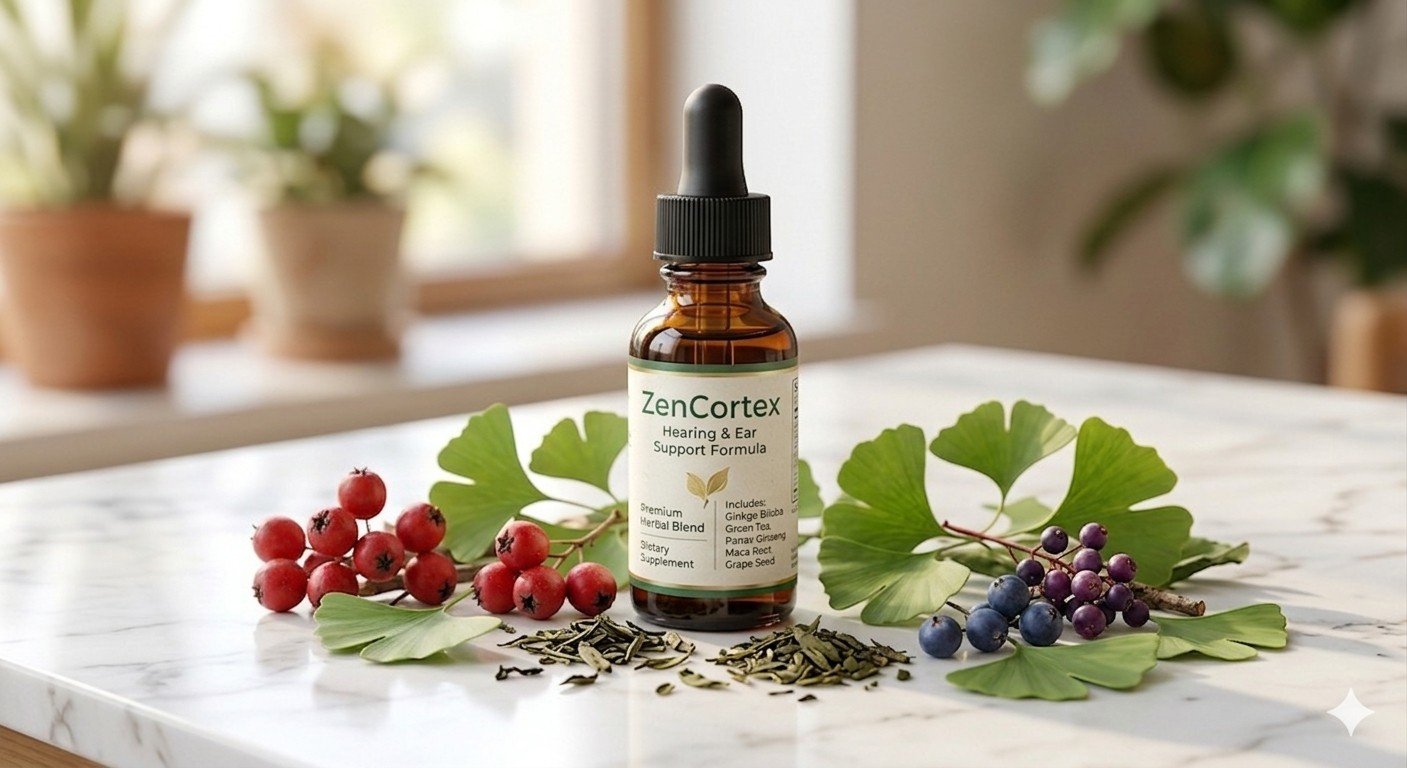
ZenCortex ingredient lists are easy to find online and easy to get wrong. Search the term and you'll surface auto-generated roundups that pad the formula with compounds it does not actually contain, invent dosages, and slap "clinically proven" on everything they mention. So we went back to the product's own published ingredient list — the same one we analyzed in our full ZenCortex review — and rebuilt the breakdown from there.
Below, each of the eight core ingredients is graded against a simple evidence framework: strong, preliminary, or animal-only. We also map each compound to the pathway it mainly works through — the auditory system or the cognitive system — because that distinction matters when you're deciding whether this formula matches your actual concern. Where the marketing says more than the research supports, we say so. Only what the published evidence supports makes it into the table.
The Evidence Framework We Used (So the Grades Mean Something)
Here is the framework we applied, in plain terms:
- Strong: the ingredient's core function is supported by multiple human trials or a systematic review in adults. The function is well characterized — what remains uncertain is whether a supplement dose produces the tested effect.
- Preliminary: a plausible mechanism is documented, but the human outcome data is early-phase, observational, or small. Reasonable bet, not a settled fact.
- Animal: the relevant effect has been demonstrated only in animal or cellular models. Promising enough for formulators to include, unproven in people.
Two honesty rules apply throughout this breakdown. First, every grade refers to the ingredient, not to ZenCortex itself — no independent randomized controlled trial of the complete formula exists, and no ingredient list can change that. Second, the published ZenCortex materials do not break out exact per-ingredient doses in the dropper, so no grade here can account for dose strength. Where an ingredient earns its grade at doses a dropper is unlikely to deliver, we point that out.
ZenCortex Ingredients at a Glance
| Ingredient | Main Pathway | Evidence Grade | Role in the Formula |
|---|---|---|---|
| Grape seed extract | Auditory + cognitive | Strong | Antioxidant protection that reaches neural and cochlear tissue |
| Green tea extract (EGCG) | Cognitive (auditory signals early) | Preliminary | Neuroprotection and oxidative-stress reduction |
| Gymnema sylvestre | Auditory, via metabolic health | Strong (metabolic) | Blood sugar regulation that protects inner-ear vasculature |
| Capsicum annuum | Auditory, via circulation | Preliminary | Cochlear microcirculation support |
| Panax ginseng | Cognitive (auditory secondary) | Strong | Working memory, processing speed, anti-inflammatory support |
| Astragalus | Auditory-neurological | Preliminary | Neuroinflammation reduction; early-stage neuron protection |
| Chromium picolinate | Auditory, via metabolism | Preliminary | Insulin sensitivity and metabolic support |
| Maca root | Cognitive | Animal | Vitality and stamina support; memory signals in animals only |
Notice the shape of that table: three ingredients with strong core evidence, four sitting at preliminary, and one that only clears an animal-model bar. That distribution is typical of multi-ingredient supplements — coherent on paper, uneven in proof.
Visit the Official ZenCortex Store →
Ingredient by Ingredient: The Full Breakdown
1. Grape Seed Extract — Strong | Auditory + Cognitive
Grape seed extract is rich in oligomeric proanthocyanidins (OPCs), among the most potent plant antioxidants. Research published in Free Radical Biology and Medicine found that OPCs cross the blood-brain barrier, which means the antioxidant protection could apply to both auditory and cognitive tissue — a rare dual credential in the list.
On the auditory side, findings reported in the International Journal of Molecular Sciences showed protection of cochlear hair cells from oxidative damage — one of the central mechanisms behind age-related hearing loss and tinnitus. The honest caveat: that hair-cell protection work is preclinical. Human antioxidant and vascular data for OPCs is solid enough to call strong; the "protects your cochlea" step is still supported mainly by mechanism, not outcome trials.
2. Green Tea Extract (EGCG) — Preliminary | Cognitive
Epigallocatechin gallate (EGCG) has one of the deepest mechanistic literatures in nutrition science. Studies published in Neurochemistry International report that EGCG supports neurogenesis and protects existing neurons from oxidative-stress-induced apoptosis, and separate findings in Free Radical Biology and Medicine suggest EGCG reduces oxidative stress in cochlear tissue — potentially slowing age-related auditory deterioration.
So why preliminary instead of strong? Because mechanistic depth and demonstrated outcomes in humans are not the same thing. EGCG's brain and ear signals come largely from cell and animal models, and the human trials that exist are inconsistent in design and result, with absorption and bioavailability complicating the picture. It earns its place on biological plausibility; whether a dropper delivers a meaningful amount depends on a dose we cannot verify.
3. Gymnema Sylvestre — Strong (Metabolic) | Auditory by Route
Gymnema sylvestre is the one ingredient whose strong evidence sits slightly apart from its function in this formula. Human clinical research supports gymnema for blood sugar regulation — that is its core, reasonably well-established function. ZenCortex includes it because chronic high blood sugar damages the microvasculature of the inner ear, accelerating hearing decline; supporting healthy glucose metabolism therefore becomes an indirect but legitimate auditory strategy.
Read the logic carefully: strong evidence for the metabolic function, an untested leap to the auditory benefit. No study we reviewed measured gymnema improving hearing outcomes directly. If blood sugar is stable, the marginal benefit is likely modest; if glucose regulation is an issue, this is the ingredient with the most human support behind the mechanism — and a reason to talk to your doctor first if you take blood sugar medication.
4. Capsicum Annuum — Preliminary | Auditory, via Circulation
Capsicum annuum provides capsaicin, documented for improving peripheral and microcirculation. The cochlea depends on consistent microvascular blood flow to deliver oxygen and nutrients to its hair cells, which makes a circulation-supporting compound a rational inclusion. Research in the European Journal of Pharmacology found that capsaicin activates TRPV1 receptors, which play a role in auditory signal transmission and cochlear protection.
The grade is preliminary because the chain of inference runs through several hops: capsaicin affects circulation (supported), good cochlear circulation protects hearing (biologically established), and therefore capsaicin benefits hearing (inferred, not measured).
5. Panax Ginseng — Strong | Cognitive, With Auditory Support
Panax ginseng is the best-evidenced cognitive ingredient in the formula. A systematic review published in the Journal of Ginseng Research found that ginsenosides — the herb's active compounds — improve working memory, processing speed, and cognitive flexibility in adults. That is human-level evidence with a review-grade foundation, which puts it clear of most nootropic ingredients.
For the auditory pathway, ginseng's anti-inflammatory and antioxidant properties may help protect cochlear tissue from oxidative damage, with its circulatory benefits supporting inner-ear blood flow — but that side of the ledger is preclinical. Practically, this means the cognitive benefits are the ones users are more likely to notice first, which matches what many users report: mental clarity improvements tend to show up before any change in hearing. Results vary.
6. Astragalus — Preliminary | Auditory-Neurological
Astragalus membranaceus brings established immunomodulatory and anti-inflammatory properties to the formula. Research published in the Journal of Ethnopharmacology found that astragalus polysaccharides protect neurons from glutamate-induced excitotoxicity — a mechanism implicated in both tinnitus and age-related cognitive decline. Reducing neuroinflammation is a defensible strategy for a formula targeting auditory-neurological health.
Where does the skepticism land? The neuron-protection findings cited here come from animal research, and the immunomodulation literature in humans has not been brought to bear on hearing-specific outcomes. Astragalus is a legitimate traditional-medicine compound with genuine modern research behind it, but its specific job in this formula rests on early-stage evidence — solid enough to include, too early to promise.
7. Chromium Picolinate — Preliminary | Auditory, via Metabolism
Chromium is an essential trace mineral that enhances insulin sensitivity and supports blood sugar regulation, and it pairs with gymnema as the metabolic wing of the formula. A study in the Journal of Trace Elements in Medicine and Biology found associations between chromium deficiency and impaired cochlear function, suggesting a role for adequate chromium intake in hearing health maintenance.
"Associations" is the operative word. Deficiency-linked correlation is not the same as demonstrated benefit from supplementation, and human trial data connecting chromium to cochlear outcomes remains thin. The same drug-interaction caution that applies to gymnema applies here: both compounds influence glucose regulation, so anyone on diabetes medication or insulin should consult their doctor before using the formula.
8. Maca Root — Animal | Cognitive
Maca root (Lepidium meyenii) is an adaptogen with documented traditional use for energy, stamina, and hormonal balance. Research published in Evidence-Based Complementary and Alternative Medicine found maca supplementation improved learning and memory — in animal models. Those findings, plus its reputation for general vitality support, appear to be the rationale for inclusion.
Graded strictly, maca is the weakest link in the list: its cognitive pathway evidence has not crossed into human outcome trials. But as a buyer grading an ingredient list, it is worth knowing which pick rests only on animal data.
What the Grades Add Up To
Vitamin-by-vitamin grading is the tedious part; pattern-matching is where an ingredient list becomes useful. Clustered by mechanism, ZenCortex's formula covers five pathways simultaneously:
- Oxidative stress protection — grape seed extract, EGCG, astragalus
- Cochlear microcirculation — capsicum annuum, panax ginseng
- Neuroinflammation reduction — astragalus, EGCG, panax ginseng
- Metabolic support for cochlear health — gymnema sylvestre, chromium picolinate
- Cognitive enhancement — panax ginseng, maca root, EGCG
That is a thoughtfully constructed matrix — no ingredient is obviously decorative, and the dual-action design (ear and brain) is not accidental. The gap between this coherence and proof, however, is a gap no ingredient list closes: no completed trial of the full formula, no published dose transparency to check the marketing math against, and no standardized outcome measure to hold the "hearing sharpness" promises to.
Three Things an Ingredient List Cannot Tell You
- Exact doses. The published ZenCortex materials do not break out per-ingredient amounts, so you cannot check a research dose against what is actually in the dropper.
- Whether hearing loss is structural. No antioxidant or adaptogen reverses structural cochlear damage or diagnosed neurological conditions — supporting function is not the same as repairing damage.
- Quality controls. No publicly confirmed third-party certificate of analysis exists for the formula, which means independent potency verification remains a transparency gap.
The Bottom Line on ZenCortex Ingredients
Three strong performers (grape seed extract, panax ginseng, gymnema for its metabolic core), four reasonably graded preliminary bets, and one animal-only inclusion — that is an honest map of this formula. The ingredient selection shows genuine thought: oxidative stress, cochlear circulation, neuroinflammation, and glucose metabolism are all real, interconnected mechanisms in age-related auditory and cognitive decline, and all are covered.
What the list cannot deliver is the promise the marketing leans on. Hearing-specific evidence mostly sits at the mechanism or animal level, cognitive benefits will likely be noticed first, and consistent use over 60–90 days is the reasonable expectation timeline for any gradual-mechanism formula. If that tradeoff — plausible multi-pathway support in exchange for unproven outcome guarantees — sounds reasonable to you, the formula is a defensible option to inspect on the official site.