Prostacet Review: Does This Prostate Supplement Really Work? (2026)
A full ingredient-by-ingredient analysis of Prostacet — what the science says about saw palmetto, lycopene, zinc, and the rest of the formula.
Prostate health is one of the most pressing concerns for men over 40. The prostate gland — a small, walnut-sized organ that plays a key role in the male reproductive system — is prone to enlargement as men age, a condition known as benign prostatic hyperplasia (BPH). Symptoms like frequent nighttime urination, weak urine flow, and difficulty fully emptying the bladder affect millions of American men, often long before they seek medical attention.
Prostacet is one of the more established prostate health supplements on the market, claiming over five million bottles shipped in the past decade. It uses a formula built around saw palmetto, lycopene, and zinc — three of the most researched natural compounds for prostate health — alongside a proprietary blend of herbs, vitamins, and minerals. In this review, I examine what the science actually says about each ingredient and who this supplement is realistically suited for.
This is the first men's health review I've published on this site, which has primarily focused on hearing and cognitive health. If those areas are relevant to you as well, my reviews of Audifort and CogniCare Pro cover those niches in depth.
What Is Prostacet?
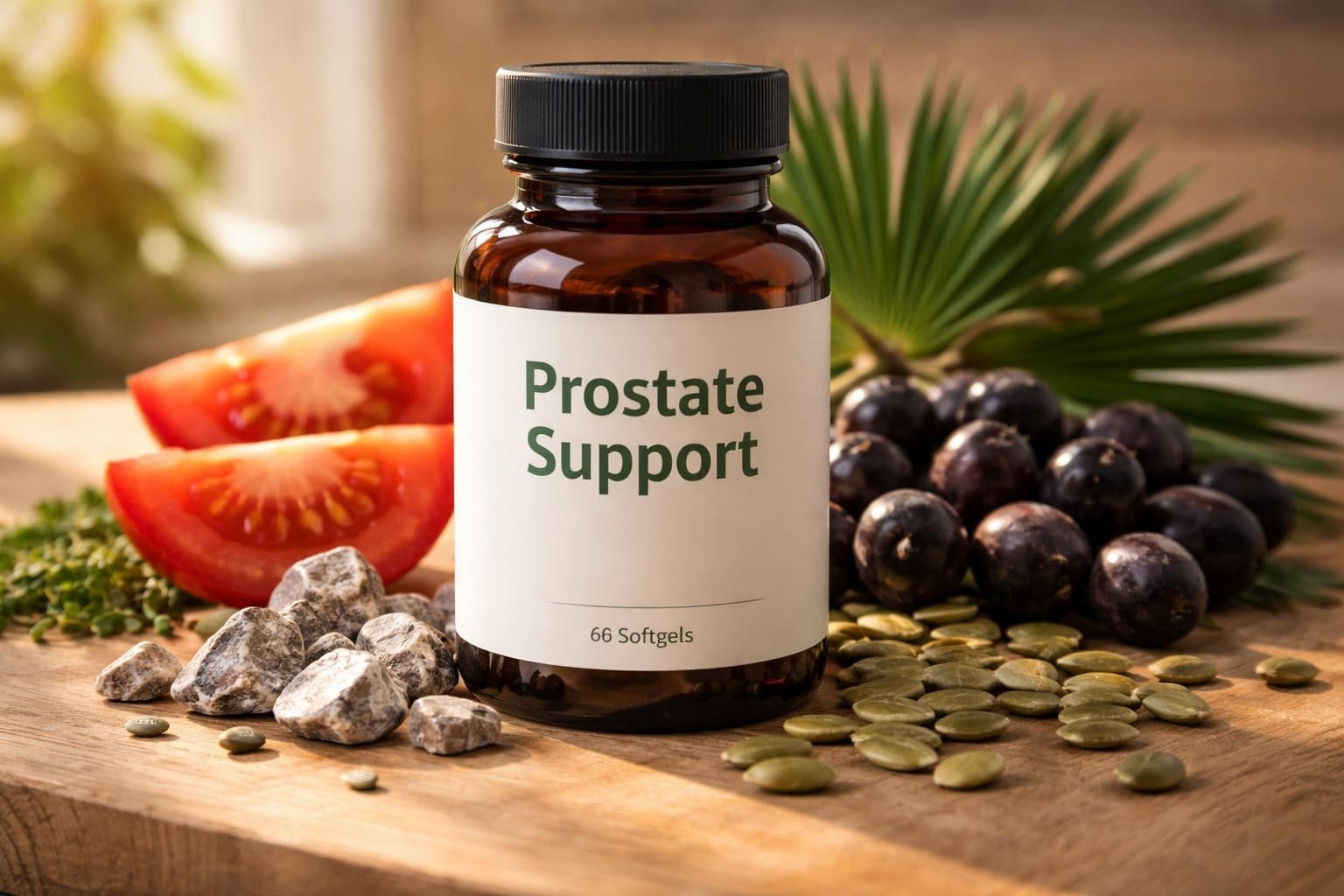
Prostacet is a softgel dietary supplement formulated specifically for prostate health. It is designed to address two of the most common concerns associated with an aging prostate: urinary flow and prostate size. According to the manufacturer, its formula works through two primary mechanisms:
- Flow Enhancement Complex — a blend of ingredients targeting urinary flow to reduce bathroom frequency and support complete bladder emptying
- Prostate Size Support Matrix — ingredients aimed at helping maintain a healthy prostate size over time
The recommended dosage is two softgels once daily with food. Prostacet comes with a 90-day money-back guarantee and is sold through its official website and select online retailers. It does not contain artificial colors, flavors, or preservatives.
Who Is Prostacet For?
- Men over 40 experiencing early signs of prostate enlargement — frequent urination, nighttime bathroom trips, or reduced urine flow
- Men looking for a natural, non-prescription approach to proactive prostate maintenance
- Those who prefer a softgel format for potentially better absorption of fat-soluble ingredients like lycopene
- Men in their 30s who want to start supporting prostate health before symptoms develop
Important: Prostacet is not a substitute for medical evaluation. Any man experiencing significant changes in urinary function, blood in urine, or pelvic pain should see a urologist before relying on any supplement. Prostate cancer and other serious conditions require professional diagnosis.
Prostacet Ingredient Analysis: What the Science Says
The strength of any supplement comes down to its ingredients. Here is what the published research says about Prostacet's key compounds:
1. Saw Palmetto Extract (Serenoa Repens)
Best for: Urinary symptom relief, DHT inhibition
Saw palmetto is the most widely studied natural compound for BPH and prostate health. Its primary mechanism is inhibiting 5-alpha-reductase — the enzyme that converts testosterone to dihydrotestosterone (DHT), a hormone that drives prostate cell proliferation. A meta-analysis published in JAMA involving over 2,900 men found that saw palmetto significantly improved urinary flow measures and reduced nighttime urination compared to placebo. Additional research has found it has anti-inflammatory properties relevant to prostate tissue health.
Saw palmetto is the most clinically documented ingredient for the types of symptoms Prostacet targets, and its inclusion as the primary active compound is the strongest argument in the formula's favor.
2. Lycopene
Best for: Antioxidant protection, prostate cell health
Lycopene is the red pigment found in tomatoes and other red fruits. It is one of the most potent dietary antioxidants, with particular affinity for prostate tissue — the prostate concentrates lycopene at higher levels than most other tissues in the body. A landmark study published in the Journal of the National Cancer Institute found that men with higher lycopene intake had a significantly lower risk of prostate issues. Additional research in the European Urology Journal demonstrated that lycopene supplementation improved urinary symptoms and reduced prostate volume in men with BPH.
Lycopene is notably absent from many competing prostate supplements, making its inclusion in Prostacet a genuine differentiator in the formula.
3. Zinc Chelate
Best for: Prostate cellular function, immune support
The prostate contains the highest concentration of zinc of any organ in the body. Zinc plays a critical role in prostate cell metabolism, and low zinc levels have been consistently associated with prostate dysfunction. Research published in the Journal of Nutrition found that adequate zinc intake is essential for maintaining healthy prostate cell function. Zinc chelate — the form used in Prostacet — is more bioavailable than standard zinc oxide, meaning it absorbs more efficiently into the bloodstream.
4. Vitamin E
Best for: Antioxidant protection of prostate tissue
Vitamin E is a fat-soluble antioxidant that protects cell membranes from oxidative stress. In the context of prostate health, it works synergistically with lycopene and zinc to reduce free radical damage to prostate tissue. As a fat-soluble nutrient, its inclusion in a softgel format (rather than a standard capsule) is appropriate, as the fat-based delivery medium improves its absorption.
5. Selenium
Best for: Antioxidant enzyme activity, cellular protection
Selenium is an essential trace mineral that forms part of several antioxidant enzyme systems in the body, including glutathione peroxidase. Research has found associations between selenium status and prostate tissue health. Its inclusion in Prostacet complements the formula's overall antioxidant approach to prostate cell protection.
6. Beta-Carotene
A precursor to vitamin A with antioxidant properties. Beta-carotene works alongside lycopene and vitamin E to provide broad-spectrum antioxidant coverage for prostate tissue, particularly relevant for men whose diets are low in colorful vegetables.
7. Proprietary Herbal Blend
Prostacet's formula also includes a proprietary blend of botanical extracts with traditional use for urinary and prostate support:
- Corn Silk Extract — traditionally used to support urinary tract health and reduce bladder irritation
- Cranberry Extract — well-documented for urinary tract support through its proanthocyanidin content
- Parsley Powder Extract — mild diuretic properties supporting urinary flow
- Cayenne Pepper — supports circulation, including to the prostate gland
- Curcumin (Turmeric) Extract — potent anti-inflammatory with documented benefits for reducing prostate inflammation
What the Research Says Overall
Prostacet's formula is built around a scientifically coherent approach to prostate health. The two standout ingredients — saw palmetto and lycopene — are among the most studied natural compounds for BPH and prostate function, with meaningful human trial evidence. The addition of zinc chelate addresses a genuine nutritional gap relevant to prostate health, and the antioxidant combination of vitamin E, selenium, and beta-carotene provides broad cellular protection.
The proprietary herbal blend adds urinary support that complements the primary ingredients, though individual doses within proprietary blends are not disclosed — a transparency limitation common across the supplement industry.
No independent randomized controlled trial exists for the complete Prostacet formula, which is standard for dietary supplements. The ingredient-level evidence, however, is stronger than most competing prostate products in this category.
Potential Benefits of Prostacet
- Reduced urinary frequency: Saw palmetto's DHT-inhibiting mechanism directly addresses the prostate enlargement that causes frequent urination
- Improved urine flow and bladder emptying: The Flow Enhancement Complex targets the urinary symptoms most commonly reported by men with early BPH
- Antioxidant protection for prostate tissue: Lycopene, vitamin E, selenium, and beta-carotene address oxidative stress — a key driver of prostate cell aging
- Prostate size support: Saw palmetto and lycopene both have evidence for supporting healthy prostate volume
- Better sleep quality: Reducing nighttime urination frequency is one of the most consistently reported improvements from saw palmetto supplementation
- Unique lycopene inclusion: Lycopene is absent from many competing prostate formulas, making Prostacet's coverage more comprehensive
Prostacet Complaints: What Users Have Reported
For a balanced assessment, here are the most common limitations and complaints associated with Prostacet:
1. Proprietary Blend Lacks Transparency
While Prostacet discloses its key ingredients (saw palmetto, lycopene, zinc), the exact doses within the proprietary herbal blend are not publicly disclosed. For consumers who want to verify that each ingredient is present at clinically studied amounts, this is a meaningful transparency gap. Saw palmetto, for example, has been studied at specific doses (320mg of standardized extract) — without knowing Prostacet's exact dose, it's difficult to verify alignment with the research.
2. Results Take Time
Saw palmetto and lycopene work through gradual mechanisms — reducing DHT activity and providing cumulative antioxidant protection over weeks and months. Users expecting rapid or dramatic improvements within the first week are likely to be disappointed. Most research studies on saw palmetto measure outcomes at 4–12 weeks of consistent use.
3. Not Effective for Advanced Prostate Conditions
Prostacet is designed for prostate maintenance and early symptom support, not for the management of diagnosed prostate conditions requiring medical treatment. Men with moderate to severe BPH, or any concern about prostate cancer, should work with a urologist rather than relying on supplementation alone.
4. Only Available Online
Prostacet is not available in physical pharmacies or retail stores. Some users find online-only availability inconvenient for reordering. The benefit is that purchasing through authorized channels guarantees product authenticity and access to the 90-day money-back guarantee.
5. Softgel Size
Some users note that the softgels are on the larger side. Taking them with food (as recommended) helps minimize any swallowing discomfort and improves absorption of the fat-soluble ingredients like lycopene and vitamin E.
Summary: Who Should Be Cautious
- Men with diagnosed moderate-to-severe BPH requiring medical management
- Anyone who has not had a prostate evaluation and is experiencing significant urinary changes
- Users expecting fast results within the first 1–2 weeks
- Those who require full ingredient dose transparency before purchasing
Who Is a Good Candidate
- Men over 40 experiencing mild urinary changes or early BPH symptoms
- Those looking for a well-rounded, multi-ingredient prostate formula
- Men who want proactive prostate support before symptoms worsen
- Users willing to commit to consistent daily use over 60–90 days
How Does Prostacet Compare?
| Feature | Prostacet | Typical Single-Ingredient Prostate Supplement |
|---|---|---|
| Primary ingredient | Saw palmetto + lycopene + zinc | Usually saw palmetto only |
| Lycopene included | ✅ Yes — unique differentiator | ❌ Rarely included |
| Antioxidant coverage | Broad (lycopene, vitamin E, selenium, beta-carotene) | Limited |
| Urinary support herbs | Yes (cranberry, corn silk, parsley, curcumin) | Varies |
| Format | Softgel (better for fat-soluble absorption) | Usually capsule or tablet |
| Money-back guarantee | 90 days | Varies (often 30–60 days) |
| Dose transparency | Partial (proprietary blend) | Varies |
How to Use Prostacet
Take two Prostacet softgels once daily with food. The manufacturer recommends consistent daily use to evaluate results, which aligns with the research timelines for saw palmetto and lycopene — both of which require extended supplementation to produce measurable changes in urinary symptoms and prostate volume. Most clinical studies measuring saw palmetto outcomes use 8–12 week evaluation periods.
Taking the softgels with a meal that contains some dietary fat will improve absorption of the fat-soluble ingredients — lycopene, vitamin E, and beta-carotene all require fat for optimal bioavailability.
Is Prostacet Worth Trying?
Based on the ingredient analysis, Prostacet presents a thoughtfully assembled formula for men looking to support prostate health naturally. Its combination of saw palmetto, lycopene, and zinc addresses the three most evidence-backed mechanisms in prostate health — DHT reduction, antioxidant protection, and cellular mineral support — in a single daily softgel.
The inclusion of lycopene is a genuine differentiator. Most competing prostate supplements in this price range focus almost entirely on saw palmetto, missing the antioxidant dimension that lycopene and the supporting nutrients address. For men whose diets are low in tomatoes and red vegetables, Prostacet's lycopene content alone may be a meaningful addition.
It is not a substitute for professional prostate care, and anyone experiencing significant urinary symptoms should have a prostate evaluation before or alongside any supplementation. But for men over 40 who want a comprehensive, multi-ingredient approach to proactive prostate maintenance, Prostacet represents a solid option — backed by a 90-day guarantee that makes a trial lower risk.